The OpenStack Blog

Category: Meetup

Recap: “Ceph Lords” OpenStack SF Meetup Feb 02

OpenStack SF Meetup Ceph

On February 2nd, a league of extraordinary gentlemen gathered inside a crowded chamber for the “Ceph LordsOpenStack SF Meetup.  About 75 Stackers were in attendance making this event a smashing success!

If you missed this Meetup, then you should watch the recorded presentations in order to experience the lively discourse.  Also, check out the photos that were taken by the Piston Cloud crew.  They did a good job capturing the fun, relaxed ambiance of the gathering.

The Meetup was facilitated by Piston Cloud and hosted by DreamHost.  Scrumptious tacos were catered by Tacolicious, and Magnolia Brewery provided a keg of ice-cold California Kolsh beer.

Ceph was in the spotlight throughout the Meetup.  For those few who are still unfamiliar with Ceph, it’s a massively scalable, open source, distributed storage system.  The presenters focused primarily on how Ceph works with the cloud software stack, and how it’s currently being implemented in production.

The DreamHost team kicked off the event.  Ben Cherian provided a brief overview on the reasons why DreamHost chose to use Ceph as the storage foundation for their current hosting products and upcoming cloud services.

Tommi Virtanen dived into the Ceph platform from a technical perpective.  He described the major components of Ceph, its storage architecture, and how it distributes data.

Carl Perry talked about how DreamHost is currently deploying Ceph.  He touched on specifics such as the hardware and tools involved, the level of automation, and things learned along the way.

Christopher MacGown, Co-Founder and CTO of Piston Cloud, was the final presenter.  He opened with how storage should work in a cloud environment and why Piston Cloud chose Ceph as the backend storage solution.  He finished by describing how his company is using Ceph with the Piston Enterprise OS™ software.

OpenStack SF Meetup Ceph


OpenStack Party @ CloudConnect 2012

For those attending CloudConnect 2012 in Santa Clara –   Join stackers from all over the world at the OpenStack CloudConnect 2012 party at Fahrenheit Lounge, hosted by Mirantis, Rackspace and Cloudscaling.

Open bar, Hors D’oeuvres and music all night long. This is the place to be at CloudConnect on a Wednesday night.

We’ll have shuttle buses available every 30 minutes, traveling between Santa Clara Convention center parking lot and Fahrenheit Lounge starting at 8pm, immediately after the Cloudscaling cocktail reception.

Registration is first come, first serve and the space is limited. Visit openstackparty.eventbrite.com to register.

OpenStack Talk hosted by the Computer Society of India Pune Chapter

This is a guest post from Devdatta Kulkarni. Thanks Dev for sharing!

The Computer Society of India (CSI) Pune chapter organized an OpenStack talk with me, Racker Devdatta Kulkarni, on Saturday January 21, 2012 from 5.00 pm – 6.30 pm.

Sunset in Pune by flickr:yogendra174Approximately 35 people attended. The audience primarily consisted of people with a technical background. Technology professionals were the most represented category followed by college students, followed by researchers.

I divided my talk into two parts. In the first part, I touched upon the need for OpenStack, the project’s history and mission, and the current projects. In the second part I delved deeper into design and architectures of Nova, Swift, Glance, and Keystone, and concluded with information about how to participate in the community.

At the end of the talk I did a quick show of hands to find out how many attendees knew about OpenStack prior to the talk. Given that I saw only three hands in response, I think the talk certainly helped in raising the awareness of OpenStack within the technical community in Pune.

Here are some of the questions that came up at the talk. Anne Gentle wrote the answers for the questions and I want to share with the attendees as well as OpenStack blog readers.
Question 1) Performance benchmarks of OpenStack deployments. They have experimented with deployment of about 200 VMs and were seeing average VM creation time of about 20 minutes. They wanted to know if this was something expected. Also, they were wondering if there are any OpenStack performance benchmark results that can be shared with the community.
Anne: A 20 minute wait sounds like a long time to me for a single VM but a short time for 200 Vms. We haven’t found a good way to share performance benchmarks yet but a post to the mailing list would probably elicit responses. I’ve also seen John Dickinson talk to folks on IRC about their Object Storage benchmarks.

Question 2) Guidelines on topology. They wanted to know if there are any published guidelines regarding the optimal topology, such as number of glance servers, number of compute, volume, and network nodes in Nova deployments?
Anne: I’d recommend they take a look at http://referencearchitecture.org for both physical and logical architecture diagrams that show the number of servers and how to scale out a deployment.

Question 3) Active Directory support in Keystone. Is this being discussed within the Keystone working group?
Anne: It’s often discussed but no one has stepped up to write an AD plugin for Keystone yet that I know of.

Question 4) Is there a QEMU-based development environment for OpenStack?
Anne: Try out http://devstack.org and if you run it in a VM, it’ll use QEMU.

Question 5) Can you give pointers to learning material?
Anne: Each of the projects has a development docs site (nova.openstack.org, glance.openstack.org, swift.openstack.org, and so on). You’ll find API and admin docs at docs.openstack.org.

OpenStack Melbourne Australia Meetup Jan 17

Openstack Melbourne Australia Meetup January 17 2012On Tuesday January 17 at the Exchange Hotel in Melbourne the inaugural Australian OpenStack Users Group meetup Part 2 took place. This followed up on the Sydney event last month and took the same format, being a casual informal get together for some drinks and conversation focused on OpenStack. We kicked off around 6pm and had an attendance of around 45 OzStackers. Many many thanks to everyone that came along!

Once again we had our attending vendors present a short overview of their company’s involvement in the project. The speakers were Mark Randall, Rackspace Country Manager for AU/NZ, Daniel PendleburyCitrix Lead Systems Engineer for Datacenter and Cloud, Gavin Coulthard, Manager – Field Systems Engineering A/NZ at F5, Peter Jung, Cloud Solutions Architect at Dell, and Andrew White, Data Centre Architect from Cisco. Following the vendors, an awesome contribution to the evening came from Dr Steven Manos, ITS Research Director from the University of Melbourne, who presented an overview of the NeCTAR project. Rounding out the talks again was Phil Rogers from Aptira.

Again as in Sydney, there was a great sense of community, lots of smiles and laughter and much conversation and enthusiasm to share information and experiences. As social events go, both this and the Sydney events have been very successful, the next round of meetups scheduled for early March will see us presenting a more structured meetup schedule with a focus on technical, with demos and the like.

Head to our Australian Meetup group to get involved, or join the AU Google group.


The First OpenStack Bug Squashing Day Is Coming On Feb 2nd

Shine your keyboards, hackers of OpenStack: on February 2nd 2012 you will be called to fight the ever growing number of bugs that keep creeping in our beloved code.  On Bug Squashing Day all the OpenStack developer community will focus mainly on Nova to:

  • Close old fixed bugs. Old bugs are nasty. Even when they are long dead, they clog bug views and render the lists unusable. Just look at old bugs and check if they still apply ! If they don’t, close them as FixReleased (if you can pinpoint when they were fixed) or Invalid (if you can’t).
  • Fix bugs. The best thing you can do on a bug squashing day is to kill a live one. Just look at the list of Confirmed or Triaged and pick your target. Submit a change that fixes it. Ask for review help on the channel.
  • Triage incoming bugs. It’s sometimes hard to distinguish fresh bugs from false alarms. You can help by using your expertise or reproduction skills on New bugs. If you can confirm the issue, set the bug to Confirmed. If you can fix it, read the previous chapter. If you need more info from the reporter, set it to Incomplete. And if it happens to not really be valid, set it to Invalid.

You don’t have to be an experienced Nova developer to participate, and we believe that February 2nd will be a great way to get started with the OpenStack community. You can get started by looking at Devstack to build your complete OpenStack development environment. The other projects are welcome to focus on quality that day but Nova is the one that will get more attention.

The event will happen mostly online, in a dedicated #openstack-bugsquash IRC channel on Freenode (that all participants are encouraged to join for the duration of the event). There will also be live meetings in Austin and San Francisco, hosted by Rackspace with food, drinks and games.

Do you want to host a Bug Squash Day on Feb 2nd? Let us know and we’ll add it to the list.


OpenStack 2012 Events

We are working on the 2012 event calendar, and are actively seeking feedback and sponsorship support for OpenStack to be well-represented at industry events.  There is a public etherpad where you can suggest an event to attend (or pass up!), and we would love to get  your input.  Right now, we are hoping to have OpenStack represented at the following industry events the first half of the year:

- SCALE10x, January 20-22, Los Angeles
- FOSDEM, February 4-5, Bruxelles, BE
- PYCON, March 7-15, Santa Clara, CA
- Ubuntu Developer Summit, May TBD
- EuroPython, June TBD, Florence, Italy
- OSCON, July 16-20, Portland, OR

We’ve had a lot of success with OpenStack having a community-sponsored presence at industry tradeshows. In this case, companies in the community may choose to pitch in and split costs for the OpenStack booth and marketing activities. In return, their brand is featured on promotional materials (signs, t-shirts, etc.), they are co-sponsors of the evening event (if applicable) and they have the opportunity to help staff the booth. Please contact Lauren Sell and Dee Rosales at events@openstack.org if you are interested in sponsoring OpenStack at upcoming events, the first of which is SCALE10x in January.

We are making headway on next OpenStack Design Summit & Conference, targeting the week of April 16 depending on venue availability.  We plan to finalize the venue and dates by the end of December, and will post a sponsorship prospectus and call for papers shortly thereafter. If you have a venue recommendation or your company might have the facilities to accommodate 800+ people, please contact events@openstack.org (note: we are moving very quickly on this with a goal to lock it down by Dec 31).

Also, if you are hosting a local meetup or OpenStack event, please contact events@openstack.org to have it listed and promoted on OpenStack.org/community/events.

Thanks for your continued support.

OpenStack Deployments Abound at Austin Meetup (12/9)

I (Rob Hirschfeld) was very impressed by the quality of discussion at the Deployment topic meeting for Austin OpenStack Meetup (#OSATX). Of the 45ish people attending, we had representations for at least 6 different OpenStack deployments (my employeer Dell, HP, ATT, Rackspace Internal, Rackspace Cloud Builders, Opscode Chef)!  Considering the scope of those deployments (several are aiming at 1000+ nodes), that’s a truly impressive accomplishment for such a young project.

Figure 1 Diablo Software Architecture. Source Dell/OpenStack (cc w/ attribution)


Even with the depth of the discussion (notes below), we did not go into details on how individual OpenStack components are connected together.  The image my team at Dell uses is included below.  I also recommend reviewing Rackspace’s published reference architecture.

Notes

Our deployment discussion was a round table so it is difficult to link statements back to individuals, but I was able to track companies (mostly).

  • HP
    • picked Ubuntu & KVM because they were the most vetted. They are also using Chef for deployment.
    • running Diablo 2, moving to Diablo Final & a flat network model. The network controller is a bottleneck. Their biggest scale issue is RabbitMQ.
    • is creating their own Nova Volume plugin for their block storage.
    • At this point, scale limits are due to simultaneous loading rather than total number of nodes.
    • The Nova node image cache can get corrupted without any notification or way to force a refresh – this defect is being addressed in Essex.
    • has setup availability zones are completely independent (500 node) systems. Expecting to converge them in the future.
  • Rackspace
    • is using the latest Ubuntu. Always stays current.
    • using Puppet to setup their cloud.
    • They are expecting to go live on Essex and are keeping their deployment on the Essex trunk. This is causing some extra work but they expect it to pay back by allowing them to get to production on Essex faster.
    • Deploying on XenServer
    • “Devs move fast, Ops not so much.”  Trying to not get behind.
  • Rackspace Cloud Builders (RCB) is running major releases being run through an automated test suite. The verified releases are being published to https://github.com/cloudbuilders (note: Crowbar is pulling our OpenStack bits from this repo).
  • Dell commented that our customers are using Crowbar primarily pilots – they are learning how to use OpenStack
    • Said they have >10 customer deployments pending
    • ATT is using OpenSource version of Crowbar
    • Need for Keystone and Dashboard were considered essential additions to Diablo
  • Hypervisors
    • KVM is considered the top one for now
    • Libvirt (which uses KVM) also supports LXE which people found to be interesting
    • XenServer via XAPI are also popular
    • No so much activity on ESX & HyperV
    • We talked about why some hypervisors are more popular – it’s about the node agent architecture of OpenStack.
  • Storage
    • NetApp via Nova Volume appears to be a popular block storage
  • Keystone / Dashboard
    • Customers want both together
    • Including keystone/dashboard was considered essential in Diablo. It was part of the reason why Diablo Final was delayed.
    • HP is not using dashboard
  • OpenStack API
    • Members of the Audience made comments that we need to deprecate the EC2 APIs (because it does not help OpenStack long term to maintain EC2 APIs over its own).  [1/5 Note: THIS IS NOT OFFICIAL POLICY, it is a reflection of what was discussed]
    • HP started on EC2 API but is moving to the OpenStack API

Austin Meetup Housekeeping

  • Next meeting is Tuesday 1/10 and sponsored by SUSE (note: Tuesday is just for this January).  Topic TBD.
  • We’ve got sponsors for the next SIX meetups! Thanks for Dell (my employeer), Rackspace, HP, SUSE, Canonical and PuppetLabs for sponsoring.
  • We discussed topics for the next meetings.  We’re going to throw it to a vote for guidance.


OpenStack in Production – Event Highlights

As a matter of tradition at this point, we offer a photo report, covering OpenStack event series that Mirantis hosts. Our December 14th event focused on sharing experience around running OpenStack in production. I moderated a panel consisting of Ken Pepple – director of cloud development at Internap, Ray O’Brian – CTO of IT at NASA and Rodrigo Benzaquen – R&D director at MercadoLibre.

This time we went all out and even recorded the video of the event: http://vimeo.com/33982906

For those that are not in the mood to watch this 50 minute panel video, here is a quick photo report:


We served wine and beer with pizza, salad and deserts…


…While people ate, drank, and mingled…


…and then they drank some more…


We started the panel with myself saying smart stuff about OpenStack. After the intro we kicked off with questions to the panel.


The panelists talked…


…and talked…


…and then talked some more.


Meanwhile, the audience listened…


…and listened.


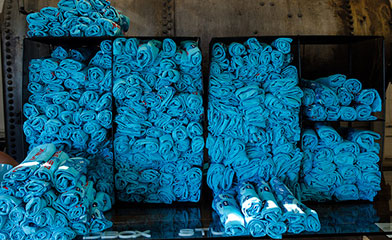
Everyone in our US team was sporting these OpenStack shirts.


At the end we gave out 5 signed copies of “Deploying OpenStack” books, written by one of our panelists – Ken Pepple. Roman (pictured above) did not get a copy.

OpenStack Sydney Australia Meetup Dec 13

Openstack Sydney Australia Meetup December 13Tuesday night December 13 saw the inaugural meetup of the Australian OpenStack Users Group at the Harbour View Hotel in Sydney, Australia.

There was obvious enthusiasm right from the start because even though we weren’t meant to start until 6.30pm there were already about 30 people there at 6.00pm. By 7.30pm we peaked at about 55 people and we filled the venue! What started in October as 5 of us going for a beer had become something awesome.

The purpose of the night was to be an in formal get together to stimulate the community and get interested “OzStackers” talking to each other, and it was clear that we got people talking. I got to meet almost everyone and we had many attendees with purely a personal interest, but we also had folks from our telcos and service providers, universities, manufacturers, retail and finance industries.

When it first became apparent we might do something more than just a few beers we thought we might get one OpenStack involved vendor to come along. What we ended up with was an overwhelming response. Each of our attending vendors were given the chance to give a talk about their involvement with the project.

Mark Randall, Rackspace Country Manager for AU/NZ, led the talks with a background and overview. Next up was Daniel Pendlebury, Citrix Lead Systems Engineer for Datacenter and Cloud giving an insight into their Project Olympus. APAC Solution Architect at F5, Adrian Noblett, talked about F5′s involvement, followed by Peter Jung, Cloud Solutions Architect at Dell with some in depth technical news on Crowbar. Nic Rouhotas from Cisco went next overviewing Cisco’s involvement and then Declan Conlon talked about Riverbed joining the community and their purchase of Zeus. Last up was Phil Rogers from Aptira with experiences of his development contributions towards several Swift client applications.

It was pretty clear that everyone had a great time and there was lots of enthusiasm to get together again as soon as possible, and many made it clear they want to see and share config and install demos and real world deployment experiences, so we’ll focus on that for follow-up meetups in the next coming months.

At the moment we have a single Australian Meetup group, the rationale being that whilst we’re still a small community down under we thought it was best to create a single nationwide group. The not necessarily bad trade off of this is that because we do recognise a significant portion of the Australian OpenStack community is not in Sydney we have an obligation to have the inaugural meetup continue in cities where the community resides! So far Melbourne is next on the list, but if there’s more of you interstate please don’t hesitate to join the meetup group at http://aosug.openstack.org.au. The listed location will change for upcoming meetup locations.

Reminder January 17 Meetup in Melbourne!

Next up is the inaugural meetup “part 2″ in Melbourne on January 17. We’re hoping to get the same vendors along, there’ll be beer and food, I look forward to seeing you there.

OpenStack Seattle Meetup 11/30 Notes

We had an informal OpenStack meetup after the Opscode Summit in Seattle.

This turned out to be a major open cloud gab fest! In addition to Dell OpenStack leads (Greg Althaus and Rob Hirschfeld), we had the Nova Project Technical Lead (PTL, Vish Ishaya from Rackspace, @vish), HP’s Cloud Architect (Alex Howells, @nixgeek), Opscode OpenStack cookbook master (Matt Ray, @mattray). We were joined by several other Chef Summit attendees with OpenStack interest including a pair of engineers from Spain.

We’d planned to demo using Knife-OpenStack against the Crowbar Diablo build.  Unfortunately, the knife-openstack is out of date (August 15th?!).  We need Keystone support.  Anyone up for that?

Highlights

There’s no way I can recapture everything that was said, but here are some highlights I jotted down the on the way home.

  • After the miss with Keystone and the Diablo release, solving the project dependency problem is an important problem. Vish talked at length about the ambiguity challenge of Keystone being required and also incubated. He said we were not formal enough around new projects even though we had dependencies on them. Future releases, new projects (specifically, Quantum) will not be allowed to be dependencies.
  • The focus for Essex is on quality and stability. The plan is for Essex to be a long-term supported (LTS) release tied to the Ubuntu LTS. That’s putting pressure on all the projects to ensure quality, lock features early, and avoid unproven dependencies.
  • There is a lot of activity around storage and companies are creating volume plug-ins for Nova. Vish said he knew of at least four.
  • Networking has a lot of activity. Quantum has a lot of activity, but may not emerge as a core project in time for Essex. There was general agreement that Quantum is “the killer app” for OpenStack and will take cloud to the next level.  The Quantual Open vSwitch implementaiton is completely open source and free. Some other plugins may require proprietary hardware and/or software, but there is definitely a (very) viable and completely open source option for Quantum networking.  
  • HP has some serious cloud mojo going on. Alex talked about defects they have found and submitted fixes back to core. He also hinted about some interesting storage and networking IP that’s going into their OpenStack deployment. Based on his comments, I don’t expect those to become public so I’m going to limit my observations about them here.
  • We talked about hypervisors for a while. KVM and XenServer (via XAPI) were the primary topics. We did talk about LXE & OpenVZ as popular approaches too. Vish said that some of the XenServer work is using Xen Storage Manager to manage SAN images.
  • Vish is seeing a constant rise in committers. It’s hard to judge because some committers appear to be individuals acting on behalf of teams (10 to 20 people).

Reminder: 12/8 Meetup @ Austin!

Missed this us in Seattle? Join us at the 12/8 OpenStack meetup in Austin co-hosted by Dell and Rackspace.  Based on our last meetup, it appears deployment is a hot topic, so we’ll kick off with that – bring your experiences, opinions, and thoughts!

Back to top