Open, Cloud Computing, And Startups: A Great Mix

Contributed by Pete Chadwick, senior cloud solutions manager, SUSE

If you think about cloud computing, then it’s inevitable that you’re going to think of the big enterprises that seem perfect for this sort of IT infrastructure. After all, they’re big, have loads of staff and resources, and are performing the big work that is ideal for cloud setups.

Cloud computing also has a great potential in a much different business sector, where money and resources are much less prolific, but the need is just as great.

The world of startups is one of frugality and agility, all wrapped up in a bundle of manic energy and dreams that hopefully won’t be crushed at any given time. Perfect, then, for cloud computing. Especially open source cloud computing.

The most obvious benefit for startups using the cloud is the reduction of capital expenditures (capex to all the cool business types). If you’re a startup, your life is going to be a lot easier and cheaper if you don’t have to outlay hundreds of thousands of dollars on the servers and networking you will need to operate your business. Not to mention the systems needed to develop your product or service.

A cloud system, particularly a public cloud, comes in handy at times like these. For an as-needed fee, you can have a lot of machines spun up and available at almost a moment’s notice.

This leads to the second benefit for startups that use the cloud: they’re going to be more innovative. Because they’re not managing the infrastructure, just the configuration of the cloud-based machines themselves, more time can be spent working on the things that matter. Like the product itself. Plus, since resources in the cloud are by their very nature elastic, then you can scale up (or down) as needed with very little pain.

This is a huge advantage when costs need to be managed and you don’t have to pay for server instances your startup is no longer using. Or when you get noticed by the masses and your service is on fire. (And better your service is on fire than your servers.)

The final benefit is specific to open cloud environments: portability. You can get the benefits mentioned here from any good cloud service provider, including Amazon Web Services or Google App Engine. But what happens if you no longer want to work with one of these providers and they’re not open?

That’s a real problem, because with their specific APIs, it’s very hard to just take your applications and move to another cloud environment. If you’ve started with an open cloud environment, like OpenStack, then you can very easily move to another OpenStack-based environment public cloud, and when your demands get large enough, you can stand up your own OpenStack private cloud.

The benefit of such portability cannot be understated – after all, besides cost savings, the big advantage a cloud computing model gives you is the agility to adapt your compute resources to changing business needs (and who needs agility more than a start-up. If you need better tools, reliability or pricing from another cloud service provider, then you need the ability to be able to take your business elsewhere. If you are using a cloud environment that already has an open API to begin with, then you are very much ahead of the game.

All of us in the OpenStack community are working to deliver cloud-based solutions to all sized businesses. Startups are risky by their very nature… so why make things more difficult from the start? Let’s give them an easy decision when it comes to their IT.

Tags:

Open Mic Spotlight: Dirk Müller

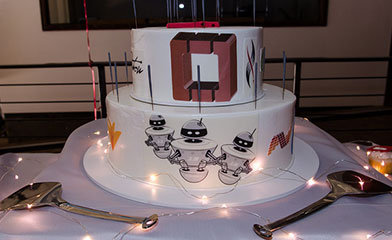
Dirk MullerThis post is part of the OpenStack Open Mic series to spotlight the people who have helped make OpenStack successful as we celebrate the third birthday of the project. Each day in July, a new contributor will step up to the mic and answer five questions about OpenStack, cloud, careers and what they do for fun. 

Dirk is a Senior Engineer on OpenStack at SUSE, where he gets in touch with all aspects of OpenStack.

1. What was your first commit or contribution and why did you make it?

That was roughly half a year ago, when I uploaded the first review (https://review.openstack.org/#/c/19830/) immediately after my CLA application was approved, and two days after I started on OpenStack. My main reason was to test how easy it is to contribute on OpenStack. I learn while doing things, so contributing was my way to learn how to contribute, and I was positively surprised that it was quite easy. And I appreciate the hard work of that “mysterious” Mr. Jenkins when he gives a +1.

2. What other OpenStack developers deserve a shout out for the work they’re doing in the community? Who are our unsung heroes? Your own?

The three areas I had most contact with are those who work on the online documentation (which is continuously improving, and already tremendously helpful!), the countless volunteers that review code changes and almost always suggest a way to improve the patch even further and last but not least Stefano (and whoever helps him) for the Community Newsletter, which is great for busy people like myself to have at least a glimpse of understanding on what is going on. I can only barely anticipate the amount of work that is put in each of those, and who ever contributes to any of those is up for my applause.

3. What’s the most critical feature you think cloud software needs to be widely adopted over the next year?

The most crucial feature is not a single blueprint, it is everything that moves towards ease of installation, configuration and consistency in use. OpenStack did well in splitting out components that are managed in individual projects, but for the full feature experience all of those components need to be combined again by the Administrator (“user”), and when going through those steps from the beginning for the first time, there are many things that one can stumble upon. For example things that are slightly inconsistent between the various projects, like configuration options doing the same but named differently, or defaults being different between projects, or the command line of the clients being slightly different. A lot of work is going on into that already, but in order to really succeed, OpenStack as a whole needs to work together on that. I believe that consistency doesn’t mean there is a “right way” of doing things. Even a “wrong way” is still slightly better if it is at least consistent between all projects and can be changed at one glimpse in one single place.

4. What do you think are the benefits of the open, community-driven approach to development?

The main benefit I think is that it puts decisions about code and features on the shoulders of those who do the work. Those who do not actively review or actively contribute code have lesser impact on the project’s direction and on individual implementation details. That just feels natural and motivating and also keeps a healthy level of pragmatism in the project. The only downside is that one probably only values openness when having experienced the downsides of non-openness before, where steering happens without being affected by the decision.

5. What is your favorite productivity hack? Secret trick? Shortcut you’re slightly embarrassed to admit?

I use F10 as a hotkey in the editor that executes a throw-away “doit.sh”, which automates the boring steps of building, redeploying and executing the steps needed to reproduce the original problem,  e.g. simply running the one testcase again that I’m aiming for at the moment.

In general the main productivity “hack” that I aim for is that as soon as I do something again for the 3rd time, I go writing a script or at least a scripted check instead, and automate that one as well as possible. It requires quite a bit of self-control though, but by remembering that executing repetitive tasks flawlessly is not a human strength, it has always paid off so far.

6. What is the most common misconception you hear about OpenStack?

That is probably the perception that OpenStack is just another way of managing virtualisation, without realizing the different philosophy behind Cloud solutions in general and OpenStack in particular. Cloud offers self-service, self-management, usage metering, as well as being designed around the idea of failure being a feature.

 7. What is your biggest hope for the OpenStack community in the next 5 years? What would be really, really amazing?

You mean what will be after the “O” release (and I’ll vote that one being called “OpenStack release” then, which would make Triple-O being Quad-O finally)? Well, my biggest hope is that there is a next release with “P” in the name then, which also includes platform services. Or we’re already way beyond that and have a “S” release?! Let’s together find it out!

Tags:

Open Mic Spotlight: Melanie Witt

Melanie WittThis post is part of the OpenStack Open Mic series to spotlight the people who have helped make OpenStack successful as we celebrate the third birthday of the project. Each day in July, a new contributor will step up to the mic and answer five questions about OpenStack, cloud, careers and what they do for fun.

Melanie Witt is a software engineer working on OpenStack at Yahoo!. She has been having fun contributing to the V3 API effort and squashing bugs in Nova.

1. What was your first commit or contribution and why did you make it?

One of my first commits was a fix for a bug I uncovered while I was working on integrating OpenStack with internal services at Yahoo!. The bug prevented admin users from seeing a backtrace when showing a VM in error state. This was significant because we have a lot of users, and the more efficient it is for ops to examine errors, the better. I immediately wanted to share the fix with other OpenStack users, and the community makes it very easy to do.

2. What other OpenStack developers deserve a shout out for the work they’re doing in the community? Who are our unsung heroes? Your own?

I think the infrastructure team deserves a lot of recognition. The continuous integration system is impressive. It ensures high quality of the code base by thoroughly testing every submitted patch and merging the code. It has been a pleasure to use.

 3. What do you think are the benefits of the open, community-driven approach to development?

I think gathering different perspectives is a great benefit of the open, community-driven approach to development. Each developer comes to the project from a different context and brings ideas from her point of view. We have a lot to learn from each other and, by working together, we can build something even better.

 4. How do you describe OpenStack to your parents?

I describe it as a set of building blocks anyone can use to assemble a computing cloud.

5. How do you think the OpenStack community will need to evolve over the next few years in light of the fast growth and maturing user needs?

I think the community will focus more on performance, scalability, and reliability as user needs mature. I see users building bigger clusters, provisioning resources in larger volume and demanding faster performance. The community is already moving in this direction, and I think there will be many exciting improvements to come.

Tags:

Open Mic Spotlight: Victoria Martínez de la Cruz

Victoria Martinez de la CruzThis post is part of the OpenStack Open Mic series to spotlight the people who have helped make OpenStack successful as we celebrate the third birthday of the project. Each day in July, a new contributor will step up to the mic and answer five questions about OpenStack, cloud, careers and what they do for fun.  

Victoria Martínez de la Cruz is a Licenciate Computer Science student and one of the former interns of GNOME OPW for OpenStack. During her internship she mainly contributed to bug fixing, bug triaging and feature development on the OpenStack Dashboard, Horizon. Currently she is a volunteer contributor on Horizon and in other OpenStack projects. She is eager to learn about new technologies, to contribute to different open-source projects and to get new people involved with open-source philosophy. Follow her on Twitter at @vkmc

1. What are the essentials for someone just getting started with OpenStack? Sites? Books? Conferences? People?

Even though I’m still a newbie, I enjoy helping people getting started with OpenStack, so there are some ideas I could share about
this. I believe that you always have to enjoy what you are doing to make sure you fully understand and you can apply it and share your knowledge afterwards. For this I would recommend trying out OpenStack on an already set up cloud like TryStack, or deploying a small cloud with DevStack in your own computer. Launch instances, add images, create some volumes… after some playing around your own needs for doing different actions will make you get into OpenStack. Once you are in this stage, you can start learning about specific topics from the official docs (which in my opinion are the best source of information), checking out OpenStack contributors blogs and enjoying conferences which may make you more familiar with the community’s ideas. Also, sharing with the OpenStack community is really important. Everyone is willing to help and will guide you in your initial steps. You can join the mailing lists, ask questions at ask.openstack.org and chat with other users and devs on IRC. There is a channel at irc.freenode.org, #openstack-101, which is aimed at helping new users and contributors to get involved with this awesome project.

2. What was your first commit or contribution and why did you make it?

My first commit was part of my application for the GNOME’s Outreach Program for Women and it was a fix for values representation in the Horizon’s quotas overview. I heard about the chance of applying for OpenStack with very short notice before the deadline for the internship, so I had to rush setting everything up and submitting the fix. Fortunately my mentor, Julie Pichon, was around helping me clear every doubt I could come up with. The most difficult part in my first commit? Writing a suitable test. Oh yeah, Mox was not my friend. Here is the bug report https://bugs.launchpad.net/horizon/+bug/1084976.

3. What do you think are the benefits of the open, community-driven approach to development?

To me the incredible OpenStack growth in these last 3 years is due to the community-driven development approach. Developers, testers, designers, documenters, translators and tons of talented people join the list of contributors everyday, and each of them enjoy working on OpenStack. This enjoyment leads to high quality contributions, cool ideas to enhance the different OpenStack components and the creation of new projects to make OpenStack even better. Also, having contributors worldwide causes contributions being submitted to OpenStack at all times. The feeling of contributing to such a large project makes everyone give their best.

4. What comment(s) have you received from users that made your proud of your work? When have you felt best about your work?

I’m a rookie developer and I’ve a lot to learn so, for now, my code contributions have not been anything crazy. But, since I started contributing to OpenStack, I have been writing in my personal blog about the entire learning process: my feelings about contributing to a FOSS organization, some advices for people willing to contribute to OpenStack and many other stuff I found useful for myself and I wanted to share.

The effort turned out to be valuable for many people and I received a lot of great comments and encouraging words. I’ve also been tweeted by some really well-known people in the cloud computing community, and invited to participate in other cool blogs and forums. That interest made me feel really proud about my work, and it also incentivized me to keep sharing my little discoveries with the OpenStack world.

5. What is your biggest hope for the OpenStack community in the next 5 years? What would be really, really amazing?

Globalization and more volunteer contributors! Currently the OpenStack community is going through a lot of changes and people all over the world are working on OpenStack and/or choosing OpenStack for their needs. Mantaining the translation (t10n) and internationalization (i18n) up to date for every project in OpenStack is a really hard work and, although the t10n and i18n OpenStack team is doing a great effort, this is just the beginning.

It would also be awesome for the community to have more volunteer contributors working on OpenStack. Having more volunteer contributions means having a diversity of ideas from different points of view, and this is an important quality for a project [1]. OpenStack is so dynamic that it makes really hard for volunteers to keep track of every change and make contributions. It would be amazing if we could find a way to facilitate even more the integration of volunteers to the current development process.

[1] https://fossbazaar.org/content/differences-between-paid-and-volunteer-foss-contributors/

Tags:

OpenStack Community Weekly Newsletter (July 19 – 26)

Hong Kong Summit – Registration, Call for Speakers & Sponsors Now Open!
在全体大会中将提供英文至中文之即时翻译。 要得到更多信息, 请查阅注册信息页
Need support to travel to Hong Kong? The All New OpenStack Travel Support Program

What is OpenStack Core?

OpenStack Foundation board member Rob Hirschfeld posted a series of short essays to spark a discussion around defining OpenStack Core. His latest post Twelve straw man positions to frame OpenStack “what is core” discussion moves to the ‘What’ is core from the how andwhy.  The twelve positions have been crafted over the course of several weeks and are constantly evolving. Next steps are to expand discussions to the OpenStack Community for input and review at the next Board Meeting on August 6th.   Ultimately, we need to close this issue at the next Summit.

To the first OpenStack Documentation BootCamp

The OpenStack Docs Bootcamp offers a deep dive into the technical tools, workflows, and processes we use to create docs.openstack.org and api.openstack.org. Our goal is to give enough information that will create sustaining new core members of OpenStack Documentation. You can register to attend through this form. More details on the OpenStack wiki.

OpenStack Hits a Triple with OpenStack on OpenStack

On the 16th July the OpenStack Technical Committee voted to make OpenStack Deployment an official OpenStack Program. Our mission is to “Develop and maintain tooling and infrastructure able to deploy OpenStack in production, using OpenStack itself wherever possible.” For the latest code and documentation visit our incubator repository at https://github.com/openstack/tripleo-incubator. OpenStack Deployment (TripleO) was started by HP as part of our active contribution to OpenStack, in order to fill in core gaps in delivering OpenStack to users.

Openstack General List Migration

Update your filters: starting from now the OpenStack General list [email protected] has become [email protected]. We have almost completed the move of all OpenStack mailing lists to our mailman installation on http://lists.openstack.org. There are some known issues still to be removed, though. Please bear with us while we fix them. Thanks to Paul Hummer and the whole Launchpad team at Canonical for making this migration happen.

Tips ‘n Tricks

Upcoming Events

Reports from Previous Events

Other News

Got answers?

Ask OpenStack is the go-to destination for OpenStack users. Interesting questions waiting for answers:

Welcome New Developers

Is your affiliation correct? Check your profile in the OpenStack Foundation Members Database!

  • Alistair Coles, HP
  • Thomas Leaman, HP
  • Jeff Sloyer, IBM
  • Adin Scannell, Gridcentric
  • Sirushti Murugesan, None
  • Cyril Roelandt, Enovance
  • Gabriel Wainer, HP
  • Liang Bo, 99cloud
  • Zhang Jinnan, 99cloud
  • Alexander Gorodnev, Mirantis
  • Ashley McNamara, None
  • Bill Owen, IBM
  • Jun Park, EIG/Bluehost
  • Claxton Correya, Rackspace
  • Kashi Reddy, Rackspace
  • Jon Snitow, Swiftstack
  • Sriram Madapusi Vasudevan, Rackspace
  • Sysnet, unknown
  • Anju Tiwari, None

OpenStack Reactions

Looking at Launchpad blueprint dependencies graph.

The weekly newsletter is a way for the community to learn about all the various activities occurring on a weekly basis. If you would like to add content to a weekly update or have an idea about this newsletter, please leave a comment.

Tags:

To the first OpenStack Documentation BootCamp

The OpenStack Docs Bootcamp offers a deep dive into the technical tools, workflows, and processes we use to create docs.openstack.org and api.openstack.org. Our goal is to give enough information that will create sustaining new core members of OpenStack Documentation.

Inspired by the first successful Infrastructure BootCamp, the OpenStack Documentation BootCamp is an in-person, intensive sprint for people who are looking to get involved deeply with OpenStack Documentation and need a leg up into the process.  Participants to the BootCamp will be all together in the same room, with their laptops and get them setup with the tool chain.

The two days event is structured so that the first day is an introduction to tools and processes, mainly aimed new contributors; day two is the deep dive into the content of all docs and manuals, with existing and new contributors on the same level.  The Docs BootCamp will be on Sept. 9-10 in Mountain View, CA by Mirantis offices.

You can register to attend through this form. More details on the OpenStack wiki.

Open Mic Spotlight: Brian Elliott

Brian ElliotThis post is part of the OpenStack Open Mic series to spotlight the people who have helped make OpenStack successful as we celebrate the third birthday of the project. Each day in July, a new contributor will step up to the mic and answer five questions about OpenStack, cloud, careers and what they do for fun. 

Brian is a software developer at Rackspace, working in the cloud servers group.  Brian’s work focuses on reliability and performance of the Rackspace public cloud.  He is also a member of the OpenStack Nova core team, a managing partner of Sparkle Software, LLC and formerly a technical lead at Orbitz.com.  He has a B.A. in Computer Science from Cornell University.  Follow him on Twitter @briandelliott

1. What do you do when you’re not obsessing over and working with OpenStack?

I spend a lot of time with my two weimaraners, Zelda and Otto.  I participate in K9 Nose Work with Zelda and am getting started in agility with Otto.  I’m also a genealogy enthusiast and have been researching my family tree for the past 10 years.

2. What are the essentials for someone just getting started with OpenStack? Sites? Books? Conferences? People?

This is technology that is advancing rapidly, so just dive in.  Install it, read the code, and seek out likeminded folks.  There are a lot of written resources around OpenStack, but honestly the code is well-maintained and very readable overall.  Python code is designed to be “read much more often than it is written,” so don’t be afraid to poke around behind the curtain.

3. What was your first commit or contribution and why did you make it?

Nothing sexy!  I committed a small change to Nova after fixing a bug in the pep8 library.  It was a good learning experience and an easy way to get my feet wet on the project.

commit 549616d12270a64548a907213c8e486bf0265dc8
Author: Brian Elliott
Date:   Mon Apr 9 19:01:43 2012
bug 968452
Update test-requires to use pep8>=1.0.  Removed PEP8 warning suppression around 3-arg raises.
Change-Id: Ib4ed42adc167aa1e8078619a36b409b76b9f5d73

4. If you could start your career over again, where would you want to begin? Advice for someone just getting started?

If I had to start over, I’d get involved with open source right away, working on projects “that matter.”  Money is nice, but doing something with your life that is valuable is very satisfying.  At some point you have to look back and ask yourself whether you made a difference.  It’s great to see your work get used by more than a single company.  For someone getting started, I’d just advise them to follow their passion.  Work on something they’d be tempted to do for free anyway!

5. If you could only have one album as your hacking playlist for the rest of time — what album would it be and why?

Probably Beethoven’s 9th symphony.  I have a version from the Chicago Symphony Orchestra that is often my go-to music for solving hard problems.  Simply put, it’s just one of the greatest pieces of music ever written and it really puts me in the right frame of mind to focus and get work done.

Tags:

Open Mic Spotlight: Chuck Thier

chuck-300x300This post is part of the OpenStack Open Mic series to spotlight the people who have helped make OpenStack successful as we celebrate the third birthday of the project. Each day in July, a new contributor will step up to the mic and answer five questions about OpenStack, cloud, careers and what they do for fun.

Chuck has been a software developer for over 6 years at Rackspace working on the Cloud Files and Cloud Block Storage products, and Founding contributor to Openstack Swift.  Follow him on Twitter at @creiht

 1. What was your first commit or contribution and why did you make it?

My first “official” commit was the original commit of the Rackspace Cloud Files code as Openstack Swift.  I thought I was going to have a couple of months to clean things up and write documentation, but then Jim Curry came in and told me we had 2 weeks so that it could be released during the announcement at OSCON.

2. What’s the most critical feature you think cloud software needs to be widely adopted over the next year? 

I think the most critical feature isn’t so much a feature as it is the applications built for the cloud.  As more applications are built to take advantage of the cloud (including Openstack) the more movement there will be to it.

 3. What comment(s) have you received from users that made your proud of your work? When have you felt best about your work? 

Every time that I hear about or assist with other deployments of Openstack Swift (Wikimedia, Mercardo Libre and many others), that makes me the most proud.

4. Describe an interesting OpenStack deployment that you were part of, and why others ought to know about it. What made that project work? Tick?

I’ve been involved with the OpenStack Swift deployments at Rackspace since before it was Openstack. Besides Swift being a great platform to build object storage off of, I think the fact that we have a great team makes a huge difference.

 5. How do you describe OpenStack to your parents?

I think they have had a basic idea of what it is, but I think it really made a little more sense for them when I showed them the “One Very Proud Dad” cartoon that Rackspace had made.

Tags:

Open Mic Spotlight: Pádraig Brady

Padraig BradyThis post is part of the OpenStack Open Mic series to spotlight the people who have helped make OpenStack successful as we celebrate the third birthday of the project. Each day in July, a new contributor will step up to the mic and answer five questions about OpenStack, cloud, careers and what they do for fun. 

Pádraig works for Red Hat and concentrates on OpenStack packaging. Upstream, he concentrates on system level performance, in Nova especially, and is a member of the Nova core team. He works remotely in rural Ireland, is a long time open source contributor, and a GNU coreutils maintainer. Follow him on Twitter at @pixelbeat_.

1. What was your first commit or contribution and why did you make it?

In November 2011 in Nova I refactored the file injection code used to modify VM images before booting, and then added libguestfs as a more sophisticated and secure mechanism to do that injection.

2. What do you think are the benefits of the open, community-driven approach to development?

The free flow of ideas and code greatly facilitates what can be constructed, while the emphasis on the ideas and code rather than on people extract the most value possible. I.E. people run hot and cold, but the community does not.

3. How do you describe OpenStack to your parents?

It’s software to allow people to not worry about hardware. That division of labor brings large benefits through economies of scale from the cloud service providers to the consumers.

4. What other open sources projects do you think work well with OpenStack, and why?

One of the most impressive things I found about OpenStack is how much of the Linux ecosystem it leverages. This is immediately apparent to me being a packager, and having plotted all the direct and indirect dependencies of the OpenStack packages. If I had to pick one project that fits best with OpenStack, it would be libvirt as it abstracts hypervisor details away from OpenStack very well, while allowing OpenStack to deal with the higher level “cloud” functionality.

5. What is your favorite productivity hack? Secret trick? Shortcut you’re slightly embarrassed to admit?

There are no shortcuts! This industry is fantastic in that the effort you put into learning something well, almost invariably pays back immensely. So my tip is to never get into technical debt by skimming something. Better to know a few things well.

Tags:

Open Mic Spotlight: Devananda van der Veen

Devananda van der VeenThis post is part of the OpenStack Open Mic series to spotlight the people who have helped make OpenStack successful as we celebrate the third birthday of the project. Each day in July, a new contributor will step up to the mic and answer five questions about OpenStack, cloud, careers and what they do for fun.  

Devananda is currently leading the development of the OpenStack Bare Metal Provisioning (Ironic) program and helping to drive the OpenStack-on-OpenStack (TripleO) program. Before joining HP Cloud Services and diving into OpenStack, he was a MySQL scalability and performance consultant with Percona. Follow him on Twitter at @devananda.

 1. What are the essentials for someone just getting started with OpenStack? Sites? Books? Conferences? People?

Have a strong opinion about something related to OpenStack, and be willing to change either one (your opinion, or OpenStack).

I came from nearly a decade working with MySQL, focused on the scaling and performance problems that web properties run into as they grow. Like a man with a hammer, OpenStack’s database looked like a nail that needed some rearranging. While working on that, many of my views about project management and community organization have changed substantially, and I’ve gained a whole lot of knowledge and experience with things I never expected to work with, like OpenVZ and IPMI.

The most useful thing for me early on was to experiment with devstack, try changing some bits, and see what I could break and what I could do differently. When I went to my first summit (Folsom), I didn’t really have a lot to talk with the developers about, but I had a framework with which to understand many of the sessions. In the following months, I found a small project (adding OpenVZ driver support to devstack) to get involved with. This approach – start from what you know and branch out – has worked really well for me with other projects in the past as well.

2. What’s the most critical feature you think cloud software needs to be widely adopted over the next year? 

Ease of installation.

There is already massive adoption of cloud APIs — everyone uses clouds — but the barrier to running your own cloud is still quite high. I think TripleO is a pretty awesome solution to this challenge: use the same API to install, manage, and then use your cloud. I’m hopeful that we’ll get all of the automation & tooling in place over the next year to make this a reality.

 3. What comment(s) have you received from users that made your proud of your work? When have you felt best about your work?

Driving the installation of infrastructure using PXE and IPMI isn’t, by itself, anything new. Lots of folks have been doing that for the last, oh, 20 years or so. At the Grizzly summit, a small group of folks — Monty Taylor, Robert Collins, myself, and a few others — did a lot of hallway-talking about the idea that we could treat the cloud as just another PaaS deployment by leveraging the Baremetal driver. Just a few months later, after making some headway demonstrating that it actually was possible, Robert Collins and I were talking about this at linux.conf.au. Josh McKenty came up to me after my miniconf session and said, “You know, I think you’re all bat-shit crazy,” with a great big smile on his face! His enthusiasm and sarcasm captured my feelings about the project very well. We *are* crazy – in a very good way. Inspiration is like that.

 4. What is your favorite productivity hack? Secret trick? Shortcut you’re slightly embarrassed to admit? 

This is for anyone testing image builds or frequently building VMs/instances locally, who also has a slow internet connection or frequently works from a cafe, conference, or airplane. My advice is to set up a squid proxy on your laptop, and let that cache image and package downloads. (You’ll have to tune squid to cache large files.) Also set up a local git repo and mirror all of github.com/openstack (and maybe github.com/stackforge too), then in your dev environment, point github.com to your local mirror. This will make each initial run of devstack much faster, and if you’re using diskimage-builder, it’ll help a lot. This should also help if you live far away from where most of these servers are hosted (e.g., if you’re in Australia).

 5. What is the one thing you wish you did differently in your career?

I really have no regrets about choices I made early on in my career, and I’m in a great place now, so there’s nothing I’d change. I made some critical choices along the way, like getting heavily involved with MySQL and NDB cluster in 2004, and passing up several other opportunities to take a job at Percona in 2008. I was very fortunate to meet some amazing folks all throughout my career. Switching to OpenStack was another strategic choice for me – there’s still a lucrative career for expert MySQL DBAs, but I chose to break out of my comfort zone when the opportunity presented itself.

The OpenStack community is filled with many of the brightest, most creative, and most enthusiastic folks I’ve ever known. We’re being paid to develop awesome open source software that, I believe, really will change the world. What could be more amazing than that? We’re working for enterprise companies like HP, Dell, IBM, etc — and we’re all collaborating!

I think the best advice I could give to the next generation of engineers is two-fold: get out there and get involved, and create balance. Social skills don’t come easily for some of us – they certainly didn’t for me –  but they are just as important as tech chops. Go to conferences, user groups, meetups, etc, every chance you get, and don’t be afraid to organize one if there’s not one near you. And then, create balance in your life. It could be home brewing, or playing in a band, or salsa dancing, or burning man, or whatever stimulates the other half of your brain and brings you closer to people in ways that matter to you.

Tags: