Open Mic Spotlight: Edgar Magaña Perdomo

Edgar Magaña PerdomoThis post is part of the OpenStack Open Mic series to spotlight the people who have helped make OpenStack successful as we celebrate the third birthday of the project. Each day in July, a new contributor will step up to the mic and answer five questions about OpenStack, cloud, careers and what they do for fun.

Edgar Magana is currently a Sr. Member of the Technical Staff at PLUMgrid. He is in charge of the integration efforts between OpenStack Neutron and PLUMgrid Platform. Edgar worked over five years for the Chief Technology Office (CTO) of Cisco Systems as a Technical Leader and Researcher. He received his Ph.D. and M.Sc. in Computer Science from Universitat Politecnica of Catalunya, Spain.

Currently, Edgar is a core member of the Neutron development team in OpenStack. He has an extensive experience on Cloud and Grid Computing, Policy-based Management Systems, Monitoring and Scheduling of networking and computational resources on distributed networks. His research interest is related to Cloud Computing, Software Defined Networks (SDN), IaaS, PaaS and SaaS. Follow him at Twitter at @emaganap

1. What’s the most critical feature you think cloud software needs to be widely adopted over the next year? 

I have been involved in many OpenStack deployments, since the Diablo release all the way to the current Grizzly one. The most complicated concept to understand and deploy is probably the networking part. Neutron team has done an amazing job in terms of extending the networking functionalities for OpenStack but there is still a need for new technologies to be included that could offer scalable and distributed virtual networking functions for tenants, not just distributed network bridges but also firewalls, load balancers, nat services and all others. We have a very stable and well known set of virtual compute solutions already, so this is the right time for virtual networking platforms!

2. What do you think are the benefits of the open, community-driven approach to development?

The main benefit is the support and testing of the solution itself. There are so many hands using, testing and improving an open, community-driven solution that you will always find an answer for your problem. It could be as simple as a blog explaining how to use that specific feature or as complex as technical documentation with illustrations and examples that will make your life much more easier.

3. Describe an interesting OpenStack deployment that you were part of, and why others ought to know about it. What made that project work? Tick?

In my current position, I help PLUMgrid customers to understand how OpenStack Networking works and how it is possible to create both Public and Private Cloud Systems with OpenStack. It is so great to see how amazed they are when they see the system working, how easy is to instantiate Virtual Machines interconnected within complex technologies that in the past was taking ages for their IT team to do.

During my time at Cisco, I was part of the team helping Service Providers deploying OpenStack with orchestration languages such as puppet. It was very interesting to experience how a very complex deployment model can be simplified with a list of flexible instructions.

4. How do you describe OpenStack to your parents?

This is a great question because I have been in that position before, I like to explain them with simple examples so that they can correlate with their everyday activities, for instance my father loves to fix almost everything and he waste a lot of time looking for the right tool for the job that he is trying to do, so one day I told him that the Cloud was a toolbox always reachable that will give him the right tool at the moment that he needs it, after a couple of minutes later, he smiled to me and said “When can I have it?”  I just smiled back to him!

5. What other open source projects do you think work well with OpenStack, and why?

Monitoring tools are essential for a successful deployment in OpenStack. I like to see “Glanglia” integrated, for instance, because a lot of OpenStack users are familiar with the way all metrics are presented there. I am also looking forward to seeing an application-driven open source project. Let’s give the power to the application not just the users, if you are an application developer and you have a platform that will let you deploy and test your application with a simple click, what else can I ask for?


Tags:

OpenStack Community Weekly Newsletter (July 12 – 19)

Hong Kong Summit – Registration, Call for Speakers & Sponsors Now Open!
在全体大会中将提供英文至中文之即时翻译。 要得到更多信息, 请查阅注册信息页
Need support to travel to Hong Kong? The All New OpenStack Travel Support Program

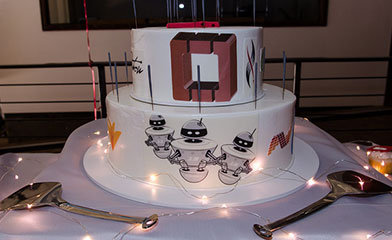
OpenStack Celebrates Three Years!

OpenStack is no one person or company or idea or line of code. It derives its strength from the collective community. No matter when you joined or what role you play, you have the ability to shape the future of OpenStack and computing.

In three short years since the community was established, OpenStack has truly become the center of cloud innovation, attracting hundreds of talented developers, brand-name users, and support from major industry leaders. This calls for a big toast to you, the OpenStack community!

A Vision for Keystone

As OpenStack evolves, its requirements for Identity Management evolve with it. In the early days, there was a single Nova server, and that stored user-id and password. Once OpenStack evolved into a body of servers, copying passwords around comprised too big a security risk. Keystone was first implemented as a central repository for those passwords. Adam Young writes in fine details what the plans are for the future of the OpenStack Identity Management service.

Glance Registry Driver

A lot is going on on Glance lately, although you may have not noticed. The team has been working on several blueprints, and most of them aim to promote glance as a public service. Flavio Percoco has published an update of what’s cooking in OpenStack Image Service.

Tips ‘n Tricks

Upcoming Events

Reports from Previous Events

Other News

Got answers?

Ask OpenStack is the go-to destination for OpenStack users. Interesting questions waiting for answers:

Welcome New Developers

Is your affiliation correct? Check your profile in the OpenStack Foundation Members Database!

OpenStack Reactions

Waiting for that last +2 on your review.

The weekly newsletter is a way for the community to learn about all the various activities occurring on a weekly basis. If you would like to add content to a weekly update or have an idea about this newsletter, please leave a comment.


Tags:

Open Mic Spotlight: Elizabeth Krumbach Joseph

ekrumbach_080_400x213This post is part of the OpenStack Open Mic series to spotlight the people who have helped make OpenStack successful as we celebrate the third birthday of the project. Each day in July, a new contributor will step up to the mic and answer five questions about OpenStack, cloud, careers and what they do for fun.  

Elizabeth Krumbach Joseph is an Automation and Tools Engineer at Hewlett-Packard working on the OpenStack Infrastructure team. She is also an elected member of the Ubuntu Community Council and a Director at Partimus.org, a non-profit in the San Francisco Bay Area providing Linux-based computers to schools in need.

1. What was your first commit or contribution and why did you make it?

When I began working on the Infrastructure team back in January, one of the first things I did after joining the #openstack-infra IRC channel was to start reading the team documentation at http://ci.openstack.org/ I quickly found some typos and those were my first few commits. In the following weeks as I set up my local development environment I continued to make updates to sections where the docs had just gotten a bit stale over time and I found room for improvement.

2. What other OpenStack developers deserve a shout out for the work they’re doing in the community? Who are our unsung heroes? Your own?

The core team of Monty Taylor, James Blair, Jeremy Stanley and Clark Boylan on Infrastructure/Continuous Integration have done really amazing work to keep the infrastructure of OpenStack chugging along. I’ve always been impressed with how all of them are deeply embedded in and committed to Open Source and the Open Source communities they work with. They’re also all exceptional at collaboration, hashing through problems openly and concisely and always willing to explain new concepts to folks in the project who wish to better understand the CI workflow. Their skills really shone through at our recent Infrastructure Bootcamp in NYC where we got a room full of 20 people together to spend 2 days explaining the infrastructure in detail without the aid of any kind of formal lesson plan.

3. Are there any skills that you think are critical for OpenStack developers in the next 5 years? What specialties will be most useful? Valuable?

I work with a lot of people in the OpenStack community who have a deep understanding of Open Source development and working collaboratively in a public environment. I think this is probably one of the most valuable skill sets to have in the project today because how you interact with a community like this in your work matters a lot here, and I believe it will continue to. On a more technical note, in the Infrastructure team we’ve seen a vast increase in the need for scaling to handle the volume of logs we’re keeping from reviews, number and types of VMs that need to be spun up for testing and more. Having the talents of more folks who are able to scale to large, complex systems in our team and across the project will be immensely valuable moving forward.

4. What comment(s) have you received from users that made your proud of your work? When have you felt best about your work?

This is the first time I’ve worked on an Open Source project where the infrastructure was not only built of Open Source tools, but all of our actual systems administration is done pretty much in the open. Not only do I really enjoy working in this environment, I’m most proud when I see that our work to do this all in the open has led to other projects and companies seeing what we’re doing and adopting similar frameworks. Tools like Jenkins Job Builder and Zuul that the CI team built are now running in production by companies, projects and individuals outside of OpenStack!

5. What is the most common misconception you hear about OpenStack?

In spite of all the press that I see, I still get people asking me if OpenStack is “actually used in production anywhere.” It’s a great opportunity for me to rattle off my list of Fortune 500 companies who use it, but it seems like the press for that hasn’t quite penetrated as far in the industry as we may like. This will certainly fade as more companies come out with what they’re using it for in their public and private clouds, one of my favorite parts of the OpenStack Summit for Havana was seeing some of these companies do just that.

Tags:

OpenStack Celebrates Three Years!

Screen Shot 2013-07-19 at 10.05.09 AM

OpenStack is no one person or company or idea or line of code. It derives its strength from the collective community. No matter when you joined or what role you play, you have the ability to shape the future of OpenStack and computing.

In three short years since the community was established, OpenStack has truly become the center of cloud innovation, attracting hundreds of talented developers, brand-name users, and support from major industry leaders. This calls for a big toast to you, the OpenStack community!

We invite you all to join the party and celebrate 3 awesome years of stacking:

  • Check out OpenStack’s Birthday Page featuring the latest stats, infographic and a web badge to download
  • Visit the OpenStack booth at OSCON, July 22-26, in Portland, OR and attend the birthday party, Wednesday, July 24
  • Attend your local birthday party, more than 40 are taking place around the world this week!
  • Learn about the contributors who make OpenStack successful through the #OpenStack #OpenMic series
  • Join the conversation on Twitter today using the hashtag #OpenStack3Bday

We’d also like to share some great perspectives from community leaders about the significance of three years for OpenStack, and where the community is headed:

Happy 3rd birthday to the OpenStack Community!

Open Mic Spotlight: Diane Fleming

julie_austin 065This post is part of the OpenStack Open Mic series to spotlight the people who have helped make OpenStack successful as we celebrate the third birthday of the project. Each day in July, a new contributor will step up to the mic and answer five questions about OpenStack, cloud, careers and what they do for fun.  

Diane Fleming is a long-time technical writer who began contributing to OpenStack docs about a year and a half ago. She lives in Austin, TX where she performs in local theater productions, gardens, swims, and enjoys drinking local micro-brews – not necessarily in that order.

1. What do I do when I’m not obsessing over and working with OpenStack?

Obsession is one of my middle names. When not working on OpenStack, I like to obsess over my (grown) children, my garden, and creative writing. Lately I’ve been making pickles using the veggies from my garden. I hand out jars to my friends at the pub. I’m certain I’m going to kill someone (by accident of course) because I didn’t process the jars correctly. No one has died yet, probably due to the amount of delicious micro-brews that they consume at the pub.

2. What other OpenStack developers and contributors deserve a shout out?

Anne Gentle! I’ve gone to a couple of OpenStack summits with her and she draws contributors like a pub draws beer-drinkers. (I recommend Green Flash West Coast IPA at the moment.)

She’s the doc lead for the OpenStack community and I work with her directly. She can put out fires, mentor new contributors, fix and review bugs, give presentations, organize events, and keep up with her fabulous blog even when not wearing her Wonder Woman costume.

3. Are there any skills that you think are critical for OpenStack developers in the next 5 years? What specialties will be most useful? Valuable?

In addition to coding skills and git expertise, communication and writing skills are key. In the open community, people tend to be less specialized. Everyone is a writer and a presenter these days. Good writers make writing look easy, so everyone thinks they can write. Writing in a colloquial style might be fine for an English-speaking audience, but it’s difficult to translate chatty, casual technical documentation into non-English prose. Other things that good writers bring to the table are: the ability to express concepts simply, reduced redundancy, great organization, and chunking of material so that it can be reused.

4. What’s the most critical feature you think cloud software needs to be widely adopted over the next year? 

This is more of a best practice rather than a feature, but it’s essential that developers separate resources from code logic for translation purposes. Don’t hard-code error messages and user interface strings inside the code. Separate these resources into separate files. Also, when developers submit code, I recommend that they submit a first draft of the documentation, even if it’s just an outline. Documentation shouldn’t be an afterthought – it should be part of a code commit.

5. What is the most important contribution you’ve made that will make OpenStack users happy?

Cleaning up the navigation on the api.openstack.org/api-ref.html and docs.openstack.org sites. The api-ref.html page now has a jump menu that lets you navigate easily to each project’s APIs. Also, you can get to all the books from a single web page rather than having to click through several pages.

6. What is your biggest hope for the OpenStack community in the next 5 years? What would be really, really amazing? 

It would be great to have more female leaders and contributors in the OpenStack community. Also, contributing to OpenStack should be easier. People who don’t code, but who do have user-interface expertise, writing skills, project management expertise, and so on, should feel comfortable about contributing. Right now, contributing to OpenStack can feel intimidating for non-programmers. But people from all backgrounds potentially have something to contribute.

Tags:

Open Mic Spotlight: Clint Byrum

ClintByrumThis post is part of the OpenStack Open Mic series to spotlight the people who have helped make OpenStack successful as we celebrate the third birthday of the project. Each day in July, a new contributor will step up to the mic and answer five questions about OpenStack, cloud, careers and what they do for fun.

Hi, my name is Clint Byrum, and I work for HP Cloud Services. I am a member of the “OpenStack on OpenStack” or “TripleO” team, working on making OpenStack deploy itself. Before OpenStack I was heavily involved with Juju. I’m an Ubuntu Core developer, Debian Developer, and Heat Core Reviewer.

1. What do you do when you’re not obsessing over and working with OpenStack?

I recently bought a 52 year old home in here Los Angeles, so I spend a lot of time fixing things. It struck me almost immediately how much a home is like a distributed computing platform. There are parts that work together, and parts that work independently. But most of all, there are lots of bugs. Luckily more figurative than literal. Of course, it has taken 52 years to build up a lot of “technical debt” in this home. Software moves a lot faster than that.

I also have a lovely wife and three sons, 10, 3, and 1, who I spend a lot of time with.

When I need to get away from it all, I sing Karaoke at Cafe Brass Monkey.

2. What was your first commit or contribution and why did you make it?

I’ve been tracking OpenStack since the first announcement, but had stayed out of development for a while. I was working for Canonical at the time and there were others who had dealt with the, shall we say “challenges”, of packaging and shipping a working Eucalyptus cluster. Those individuals, I felt, were in a better position to work on OpenStack than I was. However, working on Juju and other cloud tools, OpenStack was at the forefront in all of our decision making.

So, when I left Canonical and joined HP to work on OpenStack deployment, I started with a quick one line fix to devstack’s Heat library:

Here it is:

commit 1bd2a1b18601fa4f896160c348f2f5988d8b0106

Author: Clint Byrum <[email protected]>

Date:   Wed Dec 12 12:57:16 2012 -0800

Fixes lib/heat to use DATABASE_PASSWORD instead of MYSQL_PASSWORD

The latter is not used anywhere else, but the former is used in all of the other projects sharing the mysql database for devstack.

3. What do you think are the benefits of the open, community-driven approach to development?

OpenStack’s devotion to the broad community while staying close to its commercial contributors is extremely impressive, and I think rare even in successful open source projects. I’ve contributed to quite a few projects over the years, but few that were so inviting and helpful across the board.

I think Open Source is about users, and if you want to capture and invigorate users, making them feel welcome and important is extremely important. What I think is unique to OpenStack is that even though we’re all contributing as part of our day jobs, the culture feels casual and energetic.

4. What is the one thing you wish you did differently in your career?

I wish I had pushed myself just a little bit more early on. I never went into interviews thinking that I have anything less than a 99% chance of getting the job. Later on I came to learn that this was because I was holding back and not challenging myself.

Be bold.

5. What is your biggest hope for the OpenStack community in the next 5 years? What would be really, really amazing?

Continue the meteoric rise (why do we say meteoric when meteors fall? Anyway..) in contribution and milestones. Much like Linux, I’d like to see OpenStack get to a point where it is just obvious that this is the place you go to contribute. I’d like to see OpenStack as the platform that the leaders stand on to drive innovation in the I.T. space.

What would be really amazing? Actual Kung Fu Pandas.

Tags:

Infrastructure Bootcamp

Recently the Project Infrastructure team hosted a two-day “bootcamp”
for people who are interested in contributing to the Project
Infrastructure.  The OpenStack project is so large, and continuing to
grow, that creating and operating the developer infrastructure for the
project itself is a unique challenge.  Because OpenStack receives code
contributions from more than 600 developers in a release cycle, and
merges as many as 200 changes per day, we are at the cutting edge of
distributed development and testing.

The project infrastructure covers a wide range of tools and services
used by the project, including code review, testing, and
collaboration.  The design and operation of these systems is managed
under the Infrastructure Program which is overseen by the TC just like
the rest of the OpenStack project.  And like any other OpenStack
program, our team is open and we welcome contributions from anyone.

Managing the infrastructure for a project of this scale is a lot of
work, but it is uniquely rewarding because it affects every OpenStack
project and affords interactions with all of the developers.  We heard
a lot of interest from persons and companies who wanted to contribute,
so we held the bootcamp to get anyone who was interested in
contributing together in a room with the current core team of
infrastructure developers.

OpenStack Infrastructure Bootcamp kicks off

OpenStack Infrastructure Bootcamp kicks off
Photo: Elizabeth Krumbach, CC-BY 2.0

Day one saw us all together and discussing how contributions are
accepted, how the team operates, and how new members can expect to
become core members in the future.  We discussed each major system at
a high level, and worked out how all of the systems interact with each
other.

In the evening, we all got together for dinner and spent several
enjoyable hours talking about how we could improve the system, and
generally getting to know each other.

On day two, we dove deeper into some topics of particular interest to
attendees, and generally had a less structured approach where people
who shared interest in an area got together and discussed it in depth.

I think everyone who attended got a lot out of the event, and we’re
already seeing significant new contributions as a result.  I hope that
in several months more time we will have new core members on our
team.  I also think this is a good model for other programs in
OpenStack who want to quickly bring new contributors up to speed.

I’d like to thank Monty Taylor for organizing the event, the rest of
the core contributors (or “coremudgeons”) for talking about what we do
for two days straight, and Hewlett-Packard and the OpenStack
Foundation for sponsoring the event.

Some reactions from others who attended:
http://dague.net/2013/06/29/openstack-infrastructure-bootcamp/
http://princessleia.com/journal/?p=8229

Open Mic Spotlight: Wayne Walls

pro-headshot03This post is part of the OpenStack Open Mic series to spotlight the people who have helped make OpenStack successful as we celebrate the third birthday of the project. Each day in July, a new contributor will step up to the mic and answer five questions about OpenStack, cloud, careers and what they do for fun.

Wayne Walls is a Cloud Architect at Rackspace, where he evangelizes global cloud strategy. A tenured technology leader, Wayne has engineered complex technical solutions, delivered IT transformation plans, and implemented multiple training initiatives around cloud computing. Co-maintainer of the Rackspace Developer blog, Wayne is helping developers, engineers, and executives understand cloud technologies and how to turn that knowledge into tangible returns. He holds a B.S. of Information Systems and a B.A. of Economics from the University of Oklahoma. Follow him on Twitter at @waynewalls. 

1. Describe an interesting OpenStack deployment that you were part of, and why others ought to know about it. What made that project work? Tick?

Working at Rackspace gave me an interesting opportunity; I was able to work with OpenStack at a very early stage.  The first time I deployed OpenStack it was on the Austin release – the first OpenStack release – when Jordan Rinke and I were tasked with building an OpenStack cloud for the Bexar Design Summit in San Antonio.  If I recall correctly, Austin had roughly 1,000 lines of code and roughly five pages of documentation (compared to the now nearly 100,000 lines of code and fantastic wiki with hundreds of pages of helpful documentation available to newcomers – big props to Anne Gentle for helping the world OpenStack better).  After days of combing through the code to figure out what flags existed and what they did, we were able to stand up a six node cluster for the Friday “Deploy a Cloud” session.  Using QEMU, we were going to walk conference attendees thorough the process of deploying OpenStack…on OpenStack.  To make things even more interesting, Dell provided us a half-rack to deploy onto – a rack of prototype Dell C-series sleds running Ubuntu 10.04.

In review, here are a couple memories from our deployment:

  • #openstack on freenode had about 50 people in there.  Someone named “vish” knew a ton about everything.
  • There were multiple configuration files
    1. nova.conf
    2. nova-network.conf
    3. nova-manage.conf
  • No OpenStack API, all EC2 API controlled with euca2ools
  • No Glance; there was a service called nova-objectstore that acted as middleware that treated local disk as an S3 bucket.  This is how images were uploaded into OpenStack.
    • Finding an image to upload into OpenStack to boot was NOT EASY.
  • The command that caused a ton of heartache (unable to ping or SSH to instance once booted):
    • euca-authorize -P icmp -t -1:-1 default
    • euca-authorize -P tcp -p 22 default
  • Greg Althaus from Dell loves his khaki shorts

While digging though my notes on this project I found this small script we could use to redeploy our cloud in the event something went horribly wrong: http://paste.openstack.org/show/39512/ – this script evolved into the first ‘automated’ deployment tool for OpenStack.  Special thanks to Vish for writing “nova.sh,” the precursor to DevStack and Laurent Luce for helping us understand how it worked.  Lots of commands were directly lifted from here and made many operations folks around the world rejoice.

After reviewing the that script, I’m absolutely blown away by how far the project has come in terms of maturity, ease of use, and ease of deployment. And that’s after just three years.  I very much look forward to the next three years!

2. What is the most common misconception you hear about OpenStack?

“No one is using it in production.”  That’s baloney. Early on, companies  viewed OpenStack as a competitive advantage and were putting it into production. But they weren’t necessarily sharing that with the world.  As time passes more and more user stories are becoming public knowledge and hopefully this misconception will be dispelled. Just look at all of the customers who spoke at the last design Summit in Portland – a good number of them are running OpenStack in production.

3. What’s the most critical feature you think cloud software needs to be widely adopted over the next year? 

Authentication ties in to all OpenStack components.  The pace of innovation of OpenStack and its integrated and community projects is astounding.  From my perspective, the blocker to many companies adopting OpenStack and/or its supporting projects is the fact authentication is not fully baked and features are outpacing the ability to control access.

4. How would you suggest to someone that they should pick OpenStack for deployment? What is the most compelling argument for OpenStack in your mind?

Two main reasons:

1.  The community ecosystem is friendly, brilliant and engaging.  OpenStack is like a family, sure there are disagreements, but at the end of the day everyone is looking out for each other and wants to make OpenStack the best it can be for the world to use.

2.  Public, private and bare-metal – the hybrid cloud.  OpenStack unlocks the ability to pick the right place for your application to get the best benefit.  It’s a true hybrid cloud strategy.

5. What is your favorite productivity hack? Secret trick? Shortcut you’re slightly embarrassed to admit? 

If This Then That (IFTTT) is awesome.  Social media is a great way to keep up to date on all the things, but there is a lot of noise if you’re consuming data from multiple social networks, blogs, mailing lists, etc.  Using a service like IFTTT allows you to pick and choose how information is disseminated to you, and also how you can share information with your personal networks.


Tags:

Open Mic Spotlight: Anne Gentle

annegentlesquareThis post is part of the OpenStack Open Mic series to spotlight the people who have helped make OpenStack successful as we celebrate the third birthday of the project. Each day in July, a new contributor will step up to the mic and answer five questions about OpenStack, cloud, careers and what they do for fun.  

Anne Gentle works on the OpenStack project as a Content Stacker, collaborating on community documentation so that any organization can offer cloud computing capabilities using open source software. 

1. How do you describe OpenStack to your parents?

Honestly, I haven’t had to explain OpenStack in depth to my parents. My dad is an engineer and definitely influenced my interest in technology, bringing home all sorts of gadgets from work including a four-color pen plotter that filled up half our living room. My parents just know I’m working on an open source project where I get to experiment with community documentation. They also know I’m a Racker, and that we have a corporate office made from a repurposed suburban mall in San Antonio. When I explain my job to my siblings or friends, I just say cloud computing is like paying for electricity — you get what you need when you need it and pay for it as you go. Then they ask me what city I am traveling next with just a hint of jealousy in their voice.

2. What comment(s) have you received from users that made your proud of your work? When have you felt best about your work?

Once I went to a happy hour in Austin for a group of people getting training at Rackspace, and sat next to an ordinary man, who was attending the training. I introduced myself as the OpenStack documentation coordinator, and got the nicest response. At least I am going to take it that way. It was, “Thanks for trying to do the impossible.” I felt best about the API doc work after the Compute team documented about 90-some Compute API extensions  on the API reference site at http://api.openstack.org/api-ref.html. We are constantly trying to improve the end-user information for OpenStack and believe me, it’s not an easy or simple task.

3. What other OpenStack developers deserve a shout out for the work they’re doing in the community? Who are our unsung heroes? Your own?

Speaking of unsung heroes, I try to give shout-outs to doc contributors in my attempt-at-weekly update to the Openstack-docs mailing list. One shout-out I gave last year was to a guy named Josh in Iowa who took it upon himself to write an OpenStack glossary on the OpenStack wiki. With his permission I brought it into the docs repository for re-use across a bunch of documents as needed. It was as if it appeared out of thin air. I also agree with others who have said the translation teams are unsung heroes. Thanks to IBM and Daisy, Ying Chun Guo, we have a full documentation translation tool chain which she put together in about a year’s time. Having worked on internationalization projects for documentation in enterprise software companies in the past, I know that’s lightning fast to get from nothing to automation in 12 months. Daisy has been tireless in her efforts and definitely should be thanked for her efforts.

4. What are the essentials for someone just getting started with OpenStack? Sites? Books? Conferences? People?

I really like the voice and readability of the OpenStack Operations Guide, it’s knowledgeable yet approachable. You can find it at http://docs.openstack.org/ops.

Lately I feel it’s essential to attend an OpenStack Summit. My fellow Racker David Cramer who maintains our doc build tool worked on our doc tools for about 2 years before attending an OpenStack Summit. Once he went to the Portland Summit, he understood more about the community, the high stakes, and the hard work we have ahead of us. I introduced David to the Infrastructure team, a few coremudgeons as they’d like to be called, and I think that helped him form next steps for integrating even more with OpenStack’s way of working. Because OpenStack work really has a “way” of collaborating that can surprise even those familiar with open source due to it’s size, scope, and fast evolution.

5. What was your first commit or contribution and why did you make it?

Wow, I had to look on Launchpad to see what it was. It was fixing a typo in the Swift docs, on September 21, 2010. On the Getting Started page, development was spelled developemnt and I fixed it with https://code.launchpad.net/~annegentle/swift/lp644420. I made it because I was hired to coordinate and update OpenStack documentation. At the time we just had a Swift doc site, the Nova one didn’t really exist until the Bexar Summit if my memory serves me correctly. Wow we have come a long ways in three years. We now maintain over 30 individual “documents” for OpenStack documentation, whether it’s an API site, a dev docs site, or a book and web site.

Tags:

OpenStack Community Weekly Newsletter (July 5 – 12)

Hong Kong Summit – Registration, Call for Speakers & Sponsors Now Open!

在全体大会中将提供英文至中文之即时翻译。 要得到更多信息, 请查阅注册信息页>

The All New OpenStack Travel Support Program

The OpenStack Foundation announces the availability of travel grants under the OpenStack Travel Support Program. The program’s aim is to facilitate participation of key contributors to the OpenStack Design Summit covering costs for travel and accommodation. The Travel Support Program is based on the promise of Open Design, one of the founding principles upon which the OpenStack project is built.

Blow Out the Candles – OpenStack Turns 3!

OpenStack will celebrate it’s third birthday July 19, and we’re celebrating this month!  In three short years, Openstack has truly emerged as the center of cloud innovation, with hundreds of companies around the world relying on OpenStack to run their business. OpenStack is maturing, it’s coming of age and new users being announced every week (Fidelity, Comcast, Best Buy, Bloomberg). Over the past three years, we’ve also seen OpenStack grow internationally. There are now over 40 global user groups and more than 10,000 community members across 121 countries. And we’ve recently crossed the 1,000 authors threshold to the code base.  This calls for a big toast to the OpenStack community!

A tool for watching Zuul and Jenkins

Dan Smith wrote a very hacky text “dashboard” that merges the information from Gerrit and Zuul, and provides a periodically-refreshed view of what is going on. The tool is useful to keep close watch of patches, both to know when they’re close to merging, as well as to know early when they’re failing a test. Catching something early and pushing a fix will kill the job currently in progress and start over with the new patch. This is a more efficient use of resources and lowers the total amount of time before Jenkins will vote on the patch in such a case.

Save Space: the final frontier – Erasure Codes with OpenStack Swift

The Swift team announced an initiative to introduce erasure codes in OpenStack Swift. This initiative enables deployers to store data with erasure coding instead of or in addition to Swift’s 3-replica model.

OpenStack Programs Core Developers

David Medberry wrote a nice summary of how to identify core developers for each of the Official OpenStack Programs. This list is maintained on Gerrit for Nova, Glance, Swift, Horizon, Keystone, Cinder, Neutron, Ceilometer, Heat and OpenStack Doc.

Tips ‘n Tricks

Upcoming Events

Reports from Previous Events

Other News

Got answers?

Ask OpenStack is the go-to destination for OpenStack users. Interesting questions waiting for answers:

OpenStack Reactions

Choosing a proprietary cloud solution instead of OpenStack.

The weekly newsletter is a way for the community to learn about all the various activities occurring on a weekly basis. If you would like to add content to a weekly update or have an idea about this newsletter, please leave a comment.