OpenStack Community Supports Japan Tsunami Relief Efforts

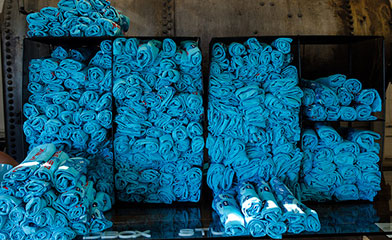
OpenStack is a global community, and contributors from Japan have been in our thoughts since the tragic earthquake and tsunami.  To show our support, at next week’s OpenStack Conference and Design Summit, we will be selling ‘OpenStack for Japan’ t-shirts benefiting the Red Cross.  The suggested minimum donation for a t-shirt is $25, and 100% of the proceeds will be donated to the charity organization. The limited-edition shirts were designed by popular cartoonist Hugh MacLeod (@gapingvoid).  Based on demand, we may also print and sell more shirts online after the event.

We look forward to the OpenStack community’s support in this effort next week in Santa Clara!

Tags:

Announcing Project RedDwarf – Database as a Service

From Daniel Morris in the OpenStack developer mailing list comes a new incubation project announcement…

Today Rackspace is announcing the introduction of Database as a Service (Project RedDwarf) for a possible affiliated OpenStack incubation project.

To give you some background, Database as a Service is a scalable relational database service that allows users toquickly and easily utilize the features of a relational database without the burden of handling complex administrative tasks.   With this service, cloud users and database administrators can provision and manage multiple database instances as needed.

Initially, our plan is for the service to focus on providing resource isolation at high performance while automating complex administrative tasks including deployment, configuration, patching, backups, restores, and monitoring. Some of the key features for the first release are listed below:

  • Single tenant MySQL instance with unlimited databasesper instance
  • Public API’s to create, read, update, and delete databases and database users
  • User and database access management with root user access
  • Scale database instance memory sizes up and down
  • Scale up storage sizes
  • Database backups and restores
  • Instance migrations
  • Instance metrics and monitoring

This represents our current thinking for a first release, and we welcome feedback from the community on any suggested features.

While still in the early stages of development, the service is already tightly integrated with OpenStack Compute (Nova).  We chose Nova because the component-based architecture and open standards make it the perfect virtualization layer for our product platform.  The compute layer provides the reusable and deployable services needed to build an extensible service deployment foundation that will be used to deliver not only a MySQL database service, but also many other services in the future.

The initial architecture of this service is being designed around several technologies listed below

  • Open Stack Compute (Nova)
  • OpenVZ – OpenVZ is a container based virtualization technology that ensures guaranteed resource minimums and maximums delivering exceptional performance from a MySQL server, comparable to a bare metal box.
  • Guest Agent – The guest agent is the management interface to the container (VM). All operations originating from the Cloud Databases API use the guest to manipulate the container.

More details can be found on the blueprint and wiki, please take a look, get involved, and provide any comments or feedback you may have.  Also, join us during our session at the OpenStack Design Summit in Santa Clara April 26th – 29th to learn more about our approach, ask questions and become active in the project!  We are excited about working with the community as we continue to develop relational databases in the cloud.

Tags:

Mark Collier on Facebook’s Open Compute

Mark Collier has a detailed blog post with plenty of videos on the recent Facebook announcement of Open Compute.  The complete post is here.

My favorite part…

Starting today, communities like Open Compute can combined forces with other open communities like OpenStack and Cloud Foundry to get real world data on how a given workload (say, serving up TMZ.com to 10M users or something less critical, like storing images from Mars) actually consumes power to find the waste and come up with innovative solutions across domains. To prove that collaboration is about action and not talk, Jesse Andrews, Jim Curry and myself approached the Facebook team after the event and said “hey! lend us some of these servers and we’ll take them to our office in San Francisco and have OpenStack running on them tonight!”. Something that might have taken months to arrange was now in motion in a matter of hours! A couple of videos of our secret plan in action:

Click over to Mark’s blog post to see OpenStack running on Open Compute hardware on launch day….

Tags:

OpenStack Cactus Release Webinar – UPDATE

OpenStack Cactus Release Webinar
Thursday, April 21, 4:00 pm ET

The OpenStack Cactus webinar will cover new features implemented in the Cactus release of OpenStack.  Presenting these features will be the Project Technical Leads: Vish Ishaya for OpenStack Compute (Nova), John Dickinson for OpenStack Object Storage (Swift), and Jay Pipes for OpenStack Image Service (Glance).  Each Project Technical Lead will have 15 minutes to provide a quick overview of their respective technologies, what’s new in the Cactus release and expected contributions for the next Diablo release of OpenStack.  The last 15 minutes will be open for questions and further discussion.

Register here: https://cc.readytalk.com/r/kdi85356wy

Tags:

OpenStack Conference is OPEN EVENT – Overflow Policy and Process

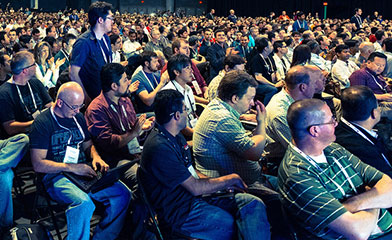
Next week is the OpenStack Conference and Design Summit sponsored by Citrix in Santa Clara, CA at the Hyatt Regency. For those of you who have been following the registration saga, we originally planned a 350 attendee event based on the Fall event in San Antonio with 250 attendees; however demand for this event has been outstanding and we currently have 400 registrants with around 100 people on the waiting list. As an open community, we have searched for a mechanism that can allow us to have everyone who wants to attend be at the event while still managing to the hotel maximum. Thus, we have made some decisions on how the event can remain open to all interested parties while still managing to the budget and maximum size set by the hotel.

OPEN EVENT
At this time, the OpenStack community is declaring the event open to any attendee wishing to be at the facility with several restrictions in place for attendees not currently registered for the event or on the current waiting list.

RESTRICTIONS

  • All attendees not registered or on the waiting list will need to register at the Welcome Desk with name, email, and organization. We need to track all people who are at the event; even those not registered. Unfortunately, we will not have any deliverables available to hand out to these registrants. You will be designated as an unregistered-attendee.
  • All food service including meals, snacks, and access to the developer lounge will be for registered attendees only WITH A BADGE; BADGES will be checked at all event functions
  • All “official” evening parties hosted during the OpenStack event are also for registered attendees only WITH A BADGE
  • All sessions are for registered attendees with a BADGE with any remaining slots in a room made available for an unregistered-attendee (see below for more information on this process)

ROOM ACCESS

  • All session rooms will be filled up by registered attendees with a badge
  • At the start of each session, all available seats will then be made available to unregistered-attendees so they can attend that session
  • Unregistered-attendees will go to a specific room at least 1 hour before any session to request access to a specific session by sitting in a specified location and waiting your turn. Once open seats are identified, people will be taken from that room based on their seating in the waiting room. We believe this method will allow as many unregistered-attendees as possible to attend various sessions

We appreciate the desire of many people to attend this event but are simply unable to accommodate the numbers currently planning to attend based on budget and space limitations. We hope this announced process still provides access to attendees wishing to take part but unable to register as we are sold out. I am a big believer in the benefit of the “hallway discussions” that occur during events and believe that opening up the event will encourage even more community members to share ideas with a variety of people leading to a more open and friendly community.

If you have any questions, please contact me directly or we can discuss further at the event next week.

Tags:

OpenStack Developer Activity Weekly Review (April 9- 15)

Many people have asked for more insight into the developer activities for OpenStack as the large number of code changes and proposals make it difficult to monitor everything happening. In hopes of exposing more of the developer activities, I plan to post a weekly or biweekly blog post on the latest development activities. If you have any ideas for this blog post, please email me at [email protected]. I am always ready to listen to the community for new ideas.

Activities

Developer Mailing List (archive: https://lists.launchpad.net/openstack/)

This is select list of topics discussed this week in the developer mailing list and is not a complete list.  Please visit the archive to see all the topics.

Statistics

  • Number of OpenStack Developers on Contributors List – 175 (+10 for week)
  • Final Cactus Release Status – Blueprints (http://wiki.openstack.org/releasestatus/)
    • Essential – 5 Design Approved; 5 Implemented
    • High – 12 Blueprints; 9 Implemented – 3 Deferred
    • Medium – 20 Blueprints; 17 Implemented – 3 Deferred
    • Low – 15 Blueprints; 8 Implemented – 7 Deferred

For the latest on development activities on OpenStack please check these sites for more details:

Tags:

Community Weekly Newsletter (April 9 – 15)

OpenStack Community Newsletter – April 15, 2011

This weekly newsletter is a way for the community to learn about all the various activities occurring on a weekly basis. If you would like to add content to a weekly update or have an idea about this newsletter, please email [email protected].

Todd Willey – On Break from Documenting OpenStack

HIGHLIGHTS

EVENTS

DEVELOPER COMMUNITY

GENERAL COMMUNITY

COMMUNITY STATISTICS (4/8– 4/15)

  • Data Tracking Graphs – http://wiki.openstack.org/WeeklyNewsletter
  • OpenStack Compute (NOVA) Data
    • 45 Active Reviews
    • 242 Active Branches – owned by 60 people & 13 teams
    • 1,947 commits by 69 people in last month
  • OpenStack Object Storage (SWIFT) Data
    • 11 Active Reviews
    • 62 Active Branches – owned by 23 people & 5 teams
    • 174 commits by 12 people in last month
  • Twitter Stats for Week:  #openstack 156 total tweets; OpenStack 448 total tweets  (does not include RT)
  • Bugs Stats for Week: 343 Tracked Bugs; 66 New Bugs; 50 In-process Bugs; 1 Critical Bugs; 11 High Importance Bugs; 215 Bugs (Fix Committed)
  • Blueprints Stats for Week:  195 Blueprints; 3 Essential, 11 High, 12 Medium, 20 Low, 149 Undefined
  • OpenStack Website Stats for Week:  12,164 Visits, 26,959 Pageviews, 57.43% New Visits
    • Top 5 Pages: Home 43.85%; /projects 10.84%; /projects/compute 16.11%; /projects/storage 11.36%; /Community 7.21%

OPENSTACK IN THE NEWS

Tags:

OpenStack Announces Cactus Release

With the availability of the Cactus release of OpenStack today the momentum and progress of the project continues to grow. A tremendous amount of effort and contribution from the large, and growing, community has added significant features, fixed a lot of bugs, and debated and discussed many technical issues. I am impressed with the progress that has been made since the Bexar release just 10 weeks ago and believe the projects and code are tracking to fill the promise of being the ubiquitous, open source cloud solution.

New features in Nova (OpenStack Compute) include:

  • Two additional virtualization technologies: LXC containers and VMWare/vSphere ESX / ESXi 4.1, Update 1. Driven by a common compute control infrastructure (Nova) this brings the options for OpenStack host virtualization to 8 (adding to Microsoft Hyper-V, KVM, QEMU, UML, Xen, and Citrix XenServer).
  • Live Migration support for KVM-based systems landed in the Cactus release; it is now possible to move running VMs from one physical host to another without a shut down.
  • Lots of new features were added to XenServer support: network and file injection, IPv6 support, instance resize and rescue, network QoS, and VM instance parameters.
  • The OpenStack Compute API version 1.0 is available, with the OpenStack Compute API version 1.1 marked as “experimental” for Cactus. The intent is to finalize the 1.1 API at the Diablo design summit and have it complete and stable in the Diablo release. Multi-tenant accounting support was added to OpenStack API, allowing multiple accounts (projects) and admin API access to create accounts & users.
  • The OpenStack Compute API version 1.1 supports a standardized extension mechanism, this allow developers to innovate more quickly by adding extensions to their local OpenStack installations ahead of the code being accepted by the OpenStack community as a whole;
  • Nova can now start instances from VHD images that include customer data and kernel in one unified image.
  • Volume backend support has been enhanced; Nova now supports volumes residing on HP SANs and Solaris iSCSI devices.
  • Continued work on feature uniformity and parity across network types and hypervisors; IPv6 is now supported in all network modes, including FlatManager and VlanNetworkManager. Basic network injection is now supported under XenAPI.
  • Multi-cluster region support, which allows administrators to manage servers in clusters, and create fault zones and availability zones.

New features in Glance (OpenStack Image Registry and Delivery) include:

  • New command line interface tool (aptly-named “glance”) that allows direct access to Glance services through the API.
  • Support for multiple image formats through a new disk_format and container_format metadata definition.
  • Uploaded images can now be verified against a client-provided checksum, to ensure the integrity of the transfer.

New features in Swift (OpenStack Object Storage) include:

  • The option to serve static website content directly from a Swift installation using container listings in index.html displays. Swift will automatically translate requests to possible /index.html resolutions, where the index.html display is configurable per container.
  • To more quickly detect errors for often-served files, Swift now performs content checksum validation during object GET actions.
  • Performance of many request types has been improved through a refactoring of the Swift Proxy Server.
  • To avoid slowdowns for common operations when deleted items build up over time, Swift now has improved indexing of the SQLite databases for account and container listing and tracking.
  • An enhanced authentication system (SWauth) is available.
  • The ability to collect and serve data that enables integration of service provider billing solutions or internal chargebacks.

In addition to the work done on the project code, there have been several other things happening to improve the state of OpenStack. Primary amongst these was the election of Project Team Leaders for the three current OpenStack projects… Congratulations to Vish Ishaya (vishy) [Nova], John Dickinson (notmyname) [Swift], and Jay Pipes (jaypipes) [Glance] as new PTL’s, they also join the OpenStack Project Policy Board.

The OpenStack Project Policy Board also had elections, with 5 board members holding elected seats. These are Thierry Carrez (ttx), Rick Clark (dendrobates), Eric Day (eday), Soren Hansen (soren), and Ewan Mellor (ewanmellor). Congratulations folks!

OpenStack has defined a process for bringing in new projects, both as core projects and those that are being incubated.  (See http://wiki.openstack.org/Governance/Approved/NewProjectProcess). The initial incubation project is “Burrow”, a simple queuing service for OpenStack being led by Eric Day (eday). At the upcoming Diablo Design Summit I expect several more projects to be proposed for incubation; including Load Balancing and Database Services.

The Diablo Design Summit is setting up to be the most dynamic and content-filled summit to date! The entire week is completely filled with attendees and items for discussion. While ttx and the PTL’s are busy scheduling all the sessions here are a few of the highlights:

  • Network as a Service. In order to fulfill the vision of OpenStack as a secure cloud infrastructure with the ability to federate across clouds it is imperative that the underlying network support isolation, federation, and the ability to manage these topologies. The NaaS discussion has many important participants working hard to collaborate on this very technical set of issues.
  • Volume services. Extending the initial Nova volume management for richer block storage solutions.
  • Additional machine types (GPU accelerators, larger multi-core processor systems).
  • Consistent authentication and authorization across OpenStack projects.
  • Multi-zone support, intra-data center and federation across data centers.
  • Project management discussions.
  • Stability and QA automation. A key theme of the Diablo release will be to automate the build and test infrastructure for OpenStack to ensure that trunk is always runnable. With the proliferation of virtualization architectures, machine architectures, and service options this will be a key element to success of the project.
  • Complete and stable OpenStack version 1.1 API.
  • Target large scale service provider deployments, with proof of concepts happening in large OpenStack contributor sites.

A job well done to all of the folks that contributed and made the Cactus release come together and get released. I will see all of you at the Design Summit in Santa Clara and look forward to the discussions around the Diablo release and the future of OpenStack!

Lastly, the OpenStack Project Team Leaders are hosting a Webinar on Tuesday April 19th at 3:00 pm CST. More information at http://www.openstack.org/blog/2011/04/openstack-cactus-webinar/.

John
Director, OpenStack@Rackspace

Tags: