The OpenStack Blog

Author Archive

OpenStack Celebrates a Successful First Year

A year into the life of OpenStack, it seems like its success should have been more obvious.  The market lacked an open platform designed specifically for building and managing a cloud.  We knew that fact at Rackspace because we had been forced to build our own solution.  For five years we looked for off the shelf technologies that could power our public cloud but never found an acceptable solution.  So we kept building our own proprietary technology.  But that wasn’t the right answer.  As a company, we had always relied on standardized technologies to power our offers.  Technologies that our customers were also running in their own data centers.  But in cloud, such standards did not exist and were nowhere in sight.  Certainly, the ones that were emerging were not completely open.  And by building our own solution — one not available to anyone else — we weren’t actually helping to solve the problem.  So we decided to open source our technology, and make it available for use by our competitors and customers alike.  What we didn’t know was whether anyone else saw the world as we did.

A year later, its obvious we weren’t alone.  Consider these stats:

  • We grew from 2 organizations to 89
  • We grew from a couple dozen developers to nearly 250 unique contributors in the Cactus release and over 1,200 in the development community
  • Over 35,000 downloads from Launchpad and thousands more from our ecosystem
  • The scope of the project has truly evolved into a cloud operating system, tackling a diverse range of cloud infrastructure needs such as networking, load balancers and database.
  • Our initial conference and design summit had over 100 people, while the last in April hosted over 450
  • We have delivered 3 major releases and are halfway to the fourth
  • 17 countries have active participants and user groups now exist on 5 continents

One of the key reasons OpenStack has been successful is that it has such an audacious mission — to build an operating system to power both public and private clouds.  We believe that while public and private clouds do have different requirements, much of the core need is shared.  Things such as basic management, self-service and scalability.   OpenStack started with the large scale cloud expertise of Rackspace and NASA and has since added a wealth of knowledge from a who’s who list contributors with broad-ranging enterprise and service provider expertise.  All of these participants recognize that in order for the promise of cloud to be realized — for workloads to seamlessly migrate from one environment to another — a common platform is required inside the enterprise DC as well as the public cloud.  The technology should also be purpose-built for cloud, rather than a bolt-on to existing server virtualization technologies.  And that solution should be open and controlled by a vast community rather than a single vendor.

The shared community desire for an open cloud operating system powering both public and private clouds has resulted in a flurry of activity around OpenStack.  Consider the following:

  • Major enterprise software companies such as Citrix and Canonical, as well as startups such as StackOps, have announced commercial distributions of OpenStack.  This is a very key development for enterprise adoption.
  • Reference hardware architectures from the likes of Dell, Cisco, Intel and AMD for OpenStack.
  • The contributions from service providers and announcement of public clouds powered by OpenStack including Rackspace, Internap, Dreamhost, Dell, Korea Telecom, Memset and Nephoscale among others.
  • Support for OpenStack deployments by the likes of Cloudscaling, Cybera and Rackspace Cloud Builders.
  • Deployment support from Puppet Labs and Opscode.
  • A host of tools and software integration from scores of companies including Scalr, Rightscale, FathomDB, enStratus, and many others.
  • Venture funding and M&A activity have picked up in the community, including the recent funding of Piston and the acquisition of Cloud.com by Citrix (both OpenStack community members).

Most importantly, enterprises are really beginning to deploy OpenStack.  It wasn’t until the Cactus release in April that OpenStack truly became ready for production deployments.  But during the 3 months since that release, the number of companies deploying the technologies is truly remarkable.  Expect to see many of these stories coming to light in the next few months.

Thank you to everyone who has made OpenStack happen over the last year!  It has been an incredibly rewarding experience to be part of such an engaged and diverse community committed to the goal of an open cloud operating system.  Happy first birthday to all!

OpenStack Day in London Recap

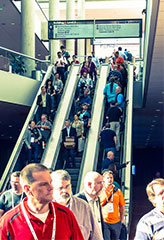
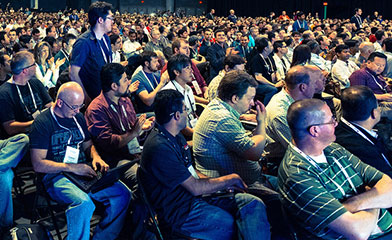
On Wednesday we held an OpenStack Day in London — the first for our community in Europe.  It’s very obvious we should have done this much sooner.  We never know how many people to expect at these events, and had planned for 125 or so.  In the end, about 350 people attended.  The catering held up well to the surge in attendees, but the wifi didn’t fare so well.  We will adjust going forward.  Here are some of my observations from the day:

1.  Not only was a substantial portion of the audience very familiar with OpenStack, many had already deployed it.  I met individuals and companies from around Europe who have already deployed OpenStack clouds.  Because we don’t track software installations, we have little idea how many of the 35,000+ downloads from Launchpad are actually running.  However, identifying yourself in the community is very critical as it allows us to help tell your story, helps other users get information, and in general helps move OpenStack forward.  So if you have deployed OpenStack, please let us know by contacting Stephen Spector (stephen.spector@openstack.org).  We are putting togther case studies and if you participate we will get you some free OpenStack schwag!

2.  Many of the attendees had traveled from other parts of Europe to attend including the France, Hungary, Norway, Finland and Spain.  We are working hard to establish user groups around the world so that anyone wanting to learn about OpenStack or chat about the project with peers will have the chance to do so.  If you are interested in running one, please also contact Stephen.

3.  The ecosystem is rapidly maturing with existing members increasing their investments, new ones continuing to join, and new businesses getting funded around OpenStack.  In particular, the discussion about OpenStack distributions from companies such as Citrix, Canonical and StackOps indicates how companies are investing in this technology as the right cloud solution for their customers.  Citrix highlighted how their acquisition of Cloud.com was a doubling down of their commitment to the project.  All of this activity bodes well for the creation of a broad range of OpenStack solutions for customers.

4.  We have some smart developers, system administrators and operators working on this project.  Vish Ishaya, Jonathan Bryce, Josh McKenty and Chmouel Boudjnah all gave excellent overviews of the technology.  The audience questions and hallway conversation also indicated that our flock of community members is well above average.

An installfest was held over pints right after the event.  We filled up the one room we booked and had to take a second.  There was some good community bonding going on for hours.  Lots of discussion was also had about a future event in Europe, so we have become looking at Paris for September.  Stay tuned for more details.

I want to thank Canonical, Equinix, Dell, Citrix, Rightscale and Rackspace for their sponsorship of the event.  If you have feedback for us, don’t hesitate to drop me a line at jim@openstack.org or @jimcurry on Twitter.

OpenStack Welcomes Facebook Open Compute Project

Today, Facebook announced a very exciting initiative called the Open Compute Project. It promises to open a vast amount of expertise to the market including the technology used in their servers, power supplies, server racks, battery backup systems and building design, and to do it as efficiently and as “green” as possible. And through collaboration with partners like Rackspace, Dell and Intel and the broader community overall — all of whom have substantial expertise in the underlying infrastructure of cloud — it promises to accelerate the overall industry knowledge base substantially. This is “open source” at its best. Open Compute is commoditizing and standardizing a layer that has traditionally been proprietary and secret, accessible only to a few. In opening this up to the world, we are not only able to consume it, but also collaborate and contribute to advance the project, so we all benefit from the best possible technology, processes and design.

We think this is huge news for the promise of open cloud. OpenStack is building the operating system upon which an open cloud can be built. But building and operating a cloud obviously requires more that just software. There are many other variables you must get right in order for OpenStack or any cloud operating system to be successful. I think everyone would agree that Facebook and their Open Compute partners have been successful at this. And now they are bringing us, the OpenStack community, in as collaborators.

OpenStack is proud to be collaborating with Open Compute to deliver something that is truly powerful for our communities. We are working with Facebook to assure OpenStack can run on top of their reference architectures. We are working with other community partners such as Dell to ensure organizations wanting to consume both projects can do so. And we are looking at how we can do more things together to deliver a truly open cloud to the world. There will be lots of opportunities for our two communities to work together, and we look forward to engaging with them going forward.

– Jim Curry

OpenStack at Six Months

I am a relatively new father to an almost 2-year-old boy.  I am very familiar with the unexpectedly fast pace of growth for a baby.  How the milestones fly by.  How I like to think about where he will be in 3, 5, and 80 years.  It’s ironic that OpenStack and my son aren’t far apart.  They both seem hellbent on world domination.  And man it’s fun to be involved!

I have been involved with OpenStack since it was a twinkle in Rackspace’s eye.  We often joke about how hard it was to convince our management and board to give away the core set of assets in which we invested so much.  In truth, it wasn’t that hard.  We have always known our core asset was really Fanatical Support, the service we provide on top of the best technology offerings in the market.  There was no need for us to own the technology.  We just needed access to the best.  It needed to be an industry standard.  And it needed to meet the requirements of our customers.  The problem was that did not exist in the cloud software space.  So it made clear sense to for us to take the lead.

The real question was whether or not the world saw the problem we did.  Would they care?  More importantly, would they join?

The answer:  It’s too early to say yes, but this baby does seem to be headed toward the gifted and talented program.  Here are some facts:

  • We now have approximately 130 registered developers on the project,  about 25 from Rackspace, and well over 150 developers consistently in our IRC channel.
  • Over 1,000 individuals are actively participating in the project in some way.
  • In just the last month, 78 different people submitted code, and we’ve had nearly 1,500 commits.
  • We had our first commercial deployment outside of Rackspace and NASA…and more are coming.
  • Over 40 companies have joined the project and are hiring, contribution, promoting and using OpenStack.
  • Black Duck named OpenStack the #2 open source project launched last year

And we are achieving our roadmap goals very quickly.   Object Storage (Swift) is ready for prime time and is being adopted quickly.  The Austin release of Compute (Nova) brought us a preview, Bexar will be enterprise-ready and Cactus launches service provider scale.  We are getting many great ideas for the community on how to move even faster.  It’s clear the world wants an open alternative to the likes of Amazon and VMware.  And they are pushing this baby to grow up fast.

We have a long way to go, and undoubtedly there will be rough spots as there are with any growing baby.  But it’s amazing to see how many people want to parent OpenStack into adulthood.  We are very appreciative of your commitment to the cause, and humbled to be a part of it.

Just imagine what this baby could be doing in 10 years.

Jim Curry
@jimcurry

The State of OpenStack…and What’s Next?! (Part One)

Wow, what a crazy month it has been! We’re really excited by all the buzz and activity that’s going on in OpenStack–in IRC (freenode.net #openstack) and on the mailing lists (launchpad.net/openstack), as well as on Twitter (@openstack) and in the media. But hype time is over and it’s time for us to begin delivering on the promises of OpenStack.

OpenStack Compute and Object Storage already have a number of important features in the code base today including:

  • managing virtual machines
  • network configuration for those VMs
  • a fully distributed, replicated storage system
  • storing, retrieving, and replicating objects and files up to 5GB in size

In addition, we have already released interfaces for controlling an OpenStack environment via a web control panel, iPad, iPhone or Android device.

But there is more coming. Chief Architect Rick Clark recently sent out an update to the community outlining the plans for our upcoming October 21 “Austin” release. This initial release of Compute will advance the project a long way, in that it will allow the community to deploy proofs of concept on hundreds of servers on a single cluster and begin developing on the platform.  This is an important milestone on the path to reaching the long term goals of the project, and will be followed by new releases every 3 months.  We will discuss the follow on releases in another blog post, and in depth at the November 9-12th Design Conference in San Antonio.

There are some important changes and updates in the Austin release that are worthy of further detail.  Let me start with what we know will be available on October 21:

1.  The OpenStack API

The Austin release will include the official OpenStack RESTful API, which initially is based on the existing Rackspace Cloud API (published under Creative Commons in 2009).   It will also include additional functionality such as role-based access controls and additional networking actions. This API will be the official OpenStack API and it will evolve with the platform and needs of the community.

What about support for alternative APIs, such as EC2?  The EC2 compatible API, already in the code base today, will remain and be maintained; however, it is important for the project to have an official API that is tied directly to the OpenStack roadmap and feature set. We want to ensure that future OpenStack innovation can be driven by the community and not be restricted to the functionality of outside cloud APIs. The sub-projects are built in a way that will allow multiple APIs to be supported, so if there is an existing API that is really important to you (or one that comes along in the future), it is possible for you to add in support for that as well.

2.  Hypervisor & Image Support

A key tenant of OpenStack is hypervisor neutrality.  OpenStack currently uses libvirt, which provides an abstraction level for hypervisor management for a number of different hypervisors. The Austin release will contain support for XenServer, KVM, and UML. It also supports VirtualBox, which allows people to launch virtual machines on their laptop, making testing and development easier for community members.

For booting up new virtual machines, OpenStack will make use of the Rackspace Cloud’s imaging framework. The framework is based on a tarball of a bootable filesystem.  We will have more detail on future image support direction soon.

3.  Unifying Compute and Object Storage

Its important that the sub-projects of OpenStack can be utilized independently, but we also want to maximize the interfaces to make the entire system hum.  To that end, the authentication system for both Compute and Object Storage will be unified. We are also making Object Storage available as the image store for Compute servers.

4.  Networking Model

We will be supporting two network models in OpenStack: statically assigned, real Internet IP addresses; and private IP addresses within a dedicated subnet, connected via NATing from a private VPN to the public internet. The API will allow users to choose which model they want. Role-based access controls for firewalling will also be added.

These are features that are already in progress and we are comfortable will be complete for the Austin release. But we would like to get more in! We received a lot of input during the Design Summit in July–and continue to see suggestions roll in from the community. With the community’s help, we would like to get these features for the Austin release as well:

1.  Better Server Volumes

The existing Rackspace Cloud supports several great features for server volume management, and we want to get those into OpenStack as soon as possible: resizing servers, snapshotting volumes, and “Rescue Mode”.

2.  Better Server Management

The existing Rackspace Cloud also has more sophisticated server management tools, which we’re actively porting into OpenStack: “Rescue Mode”, and Web-based console access.

3.  Underlying (Core) Refactoring

We want to have as many people running, working on, and contributing to OpenStack as possible. Pragmatically, that means we need to try and make the codebase as friendly as possible. Current efforts are on three broad tracks:

a.  Packaging, deployment recipes, and installers

b.  Making the programming models as standard and understandable as possible

c.  Abstracting the datastore from the object model (enabling folks to use SQL or alternate KVS systems)

d.  Cleaning up code and providing consistent, useful documentation (read about our new tech writer)

We think these last three items are important and urgent, and hope to get active community engagement on their development. Hopefully they will make it into the Austin release, although since this is a time-boxed release, we can’t be certain.  Our priority will be to deliver a stable set of features rather than broad. If they are not ready by mid-October, we expect the community will be able to deliver them by our next release in January 2011 (more on that later).

Thanks Stackers for getting this project off to a great start!  Please reach out if you have any feedback or need any assistance.

On behalf of the OpenStack Team and Community,

Jim Curry
Chief Stacker
@jimcurry, jim@openstack.org

Introducing OpenStack

If you were to pick one word to describe open source, it probably would be freedom. Freedom to innovate. Freedom to consume. Freedom to redefine. There is a great tradition of open source movements revolutionizing entire segments of the computing and software world by fostering freedom – Linux and operating systems, Apache and web servers, mySQL and databases — just to name a few. Those open source projects introduced freedom for both developers and consumers of technology, thus accelerating the pace of innovation and adoption. Today we are proud to add OpenStack to that list of revolutionary ideas, bringing a new era of freedom to the cloud marketplace.

What is OpenStack? Well, our mission statement says this:

To produce the ubiquitous OpenSource Cloud Computing platform that will meet the needs of public and private clouds regardless of size, by being simple to implement and massively scalable.

That is a pretty big ambition. The good news is that OpenStack is starting with code contributions from two organizations that know how to build and run massively scalable clouds – Rackspace and NASA. Rackspace has been in the cloud business for four years and now serves tens of thousands of customers on its cloud platform. Likewise, NASA began building their Nebula cloud platform two years ago to meet the needs of their scientific community.

Today, OpenStack consists of two projects. The first is a fully distributed object store based on Rackspace’s Cloud Files offering called "OpenStack Object Storage". The code is available today at OpenStack.org. The second piece is a scalable compute-provisioning engine based on the NASA Nebula cloud technology and Rackspace Cloud Servers offering called "OpenStack Compute." Developers can download components of OS Compute beginning today at OpenStack.org. The first release is expected to be available later this year. So starting today, anyone can build their own cloud using the same technology that underlies two of the largest and best ones out there.

But it’s not just code from Rackspace and NASA. Last week, more than 100 architects and developers from over 25 companies came to Austin to begin defining the roadmap for OpenStack… and more importantly to begin jamming away at the code! The list included developers from managed hosters, hardware and component manufacturers, enterprise software and service companies, other open source projects, and cloud tools vendors. These community founders are already driving our project forward, and we are actively seeking more contributors to do the same!

What does "openness" mean to us? "Open" and "open source" are thrown around a lot, so its worth specifically defining our commitment to the community:

  • COMMITMENT #1: We are producing truly open source software. No artificial limits will be placed or performance limitations maintained. No licensing model – one free, one paid – will be introduced. We are releasing the code under the Apache 2.0 license which allows the community to do with the software as they see fit, including implement into other distributions or “for fee” offerings.
  • COMMITMENT #2: We are committed to an open design process. Rackspace will provide dedicated project leads to guide the roadmap on behalf of the community. We will hold regular design summits—open to anyone—which will produce a roadmap to guide development.
  • COMMITMENT #3: All development will be done in the open. We will maintain a publicly available source code repository to simplify participation.
  • COMMITMENT #4: We will maintain an open community. Healthy, vibrant developer and user communities are the basis of any open source project. Most decisions will be made using a "lazy consensus" model. All processes will be documented, open and transparent.

You can learn more by going to the Rackspace press release. Also please follow us on Twitter (@openstack) for regular updates.

So the mission starts now! We are here to help you with this project any way we can, so please reach out and let us know what we can do. You can personally reach me anytime at jim@openstack.org or by following me on twitter (@jimcurry).

Cloud freedom, open for business!

Jim Curry
OpenStack Lead, OpenStack.org

Back to top